
Atrial fibrillation (AFib) is the most common irregular heartbeat, affecting millions of people, the majority of whom are not aware of the condition until they’re diagnosed. It can increase your risk of stroke by up to five times and can increase your risk of other complications.
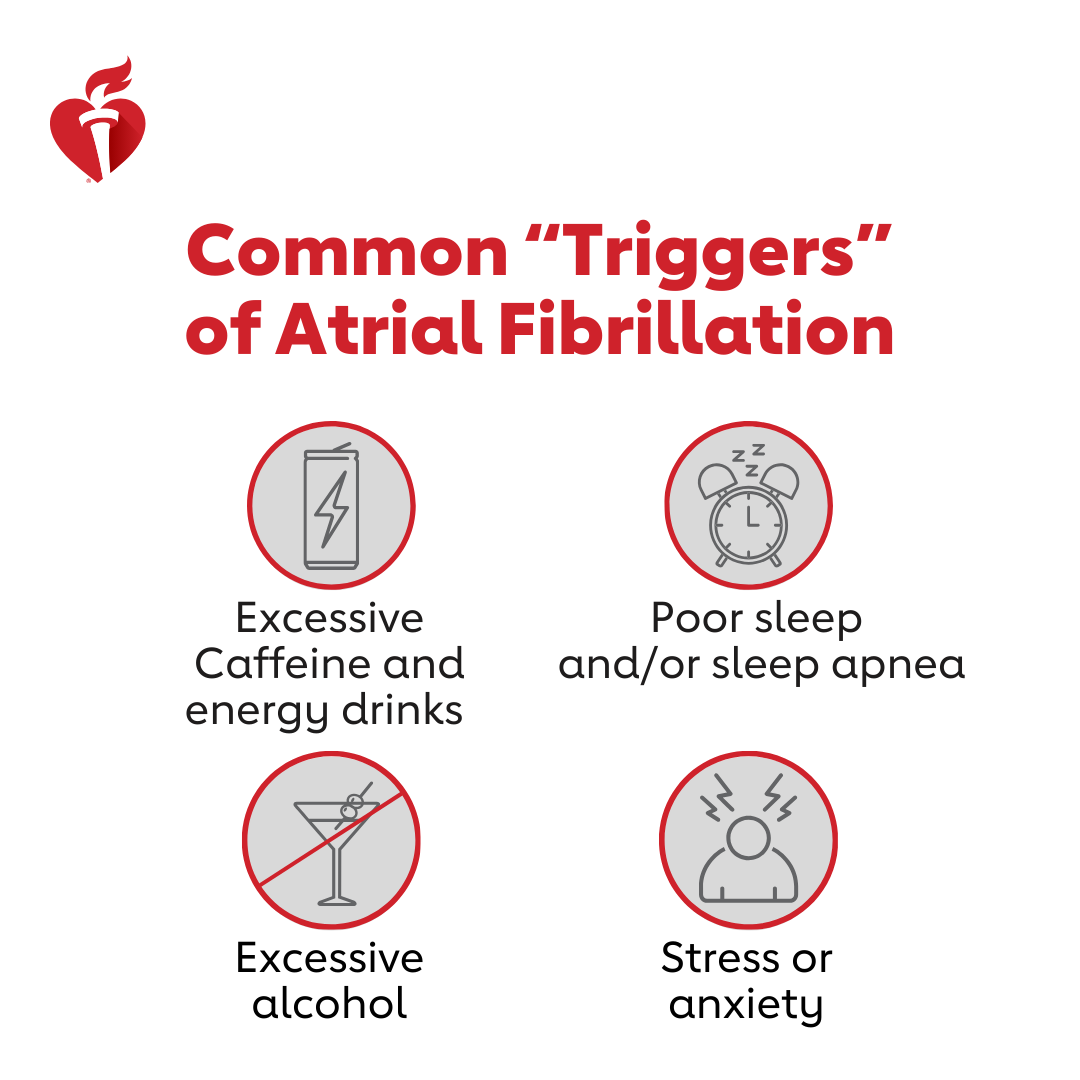
While anyone can develop AFib, the risk rises with age and certain health behaviors can increase your likelihood of developing it, including:
- Consuming excessive caffeine and energy drinks or excessive alcohol
- Getting poor sleep or having sleep apnea
- Experiencing stress or anxiety
The good news is that early detection and treatment can help. While not always symptomatic, one of the most common symptoms of AFib is a racing pulse or irregular heartbeat associated with shortness of breath and fatigue. Other common symptoms include fluttering or thumping in the chest, dizziness, anxiety, weakness, faintness or confusion, sweating and chest pain or pressure.
Understand your risks, talk to your doctor and bookmark Heart.org/AFib for timely resources.
To learn even more, watch this video, featuring local volunteer, Estelle Jean, M.D., of Medstar Health, for a quick explainer on AFib, a snapshot of its risk factors and symptoms and how you can take charge of your risks.