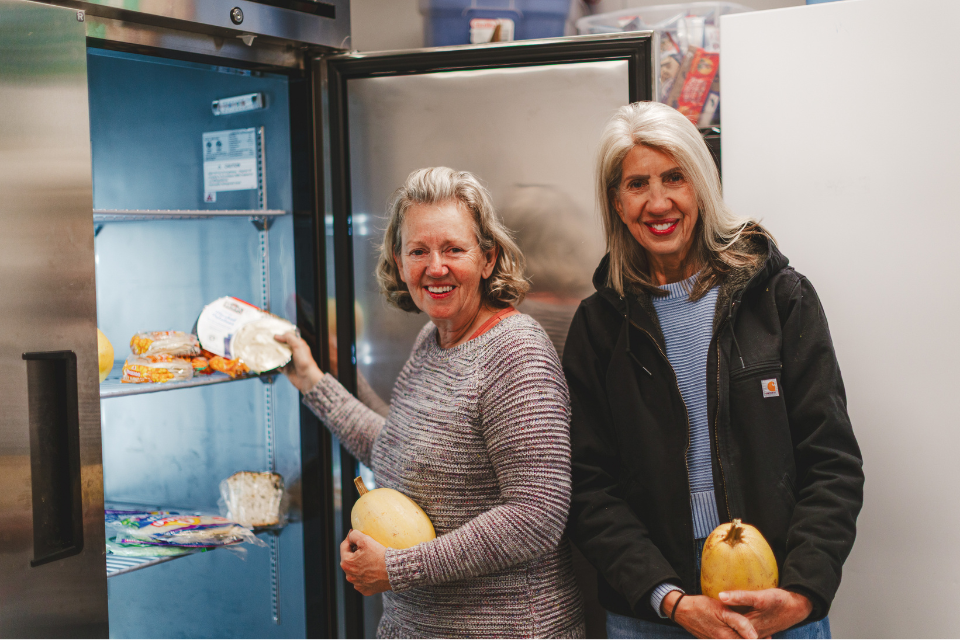
By Maryann Doiron and Paula Eno, as told to the American Heart Association
By 6:30 on a Saturday morning, two and a half hours before we open, there’s already a line forming outside our door. Families with young children, older neighbors, and students working their way through school all wait for the groceries that will carry them through the week.
The Helping Hand Food Pantry has been serving the Greater Boston community for decades, always finding a way to make it work. But what we couldn’t always offer was reliable cold storage for perishable, healthy food. Our old refrigerator was on its last legs, and we regularly borrowed coolers just to keep yogurt and milk from spoiling. When food rescue partners offered us fresh dairy or produce, we sometimes had to say “not today” because we simply had nowhere safe to store it.
Thanks to the generous support of the American Heart Association, we now have a commercial-grade refrigerator large enough to hold more fresh dairy, more fruits and vegetables, and more of the goods that make a difference for health. Now, at our twice-monthly distribution at St. James Episcopal Church in Cambridge, Mass., our tables are fuller and more consistent, piled high with leafy greens, crisp vegetables and cold milk.
Our work with the American Heart Association has helped us grow in other ways too. Their team has helped us to better understand the nutritional value of the food we distribute and guided us in developing our first nutrition policy. That shift has changed how we order and prioritize food, making healthier options more accessible for our clients.
In a state where about 30% of households experience food insecurity, this support means more nutritious food, fewer compromises, and more dignity for the households we serve each month.