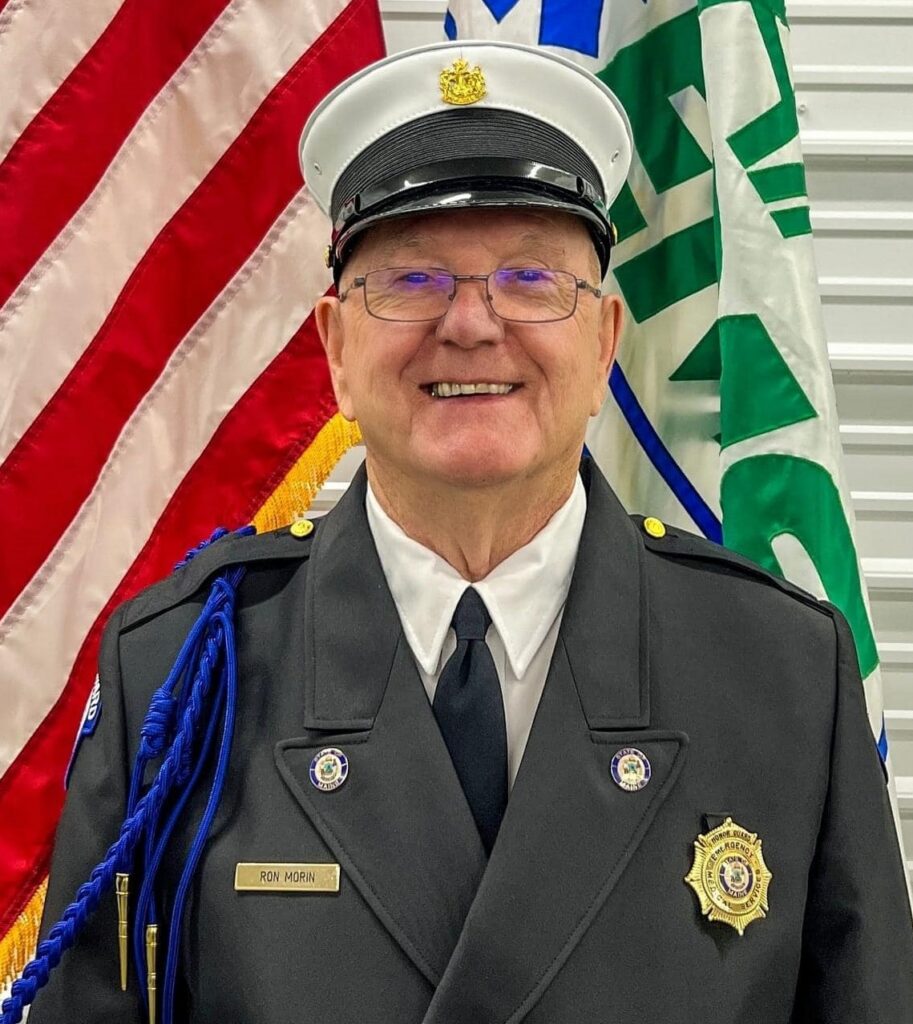
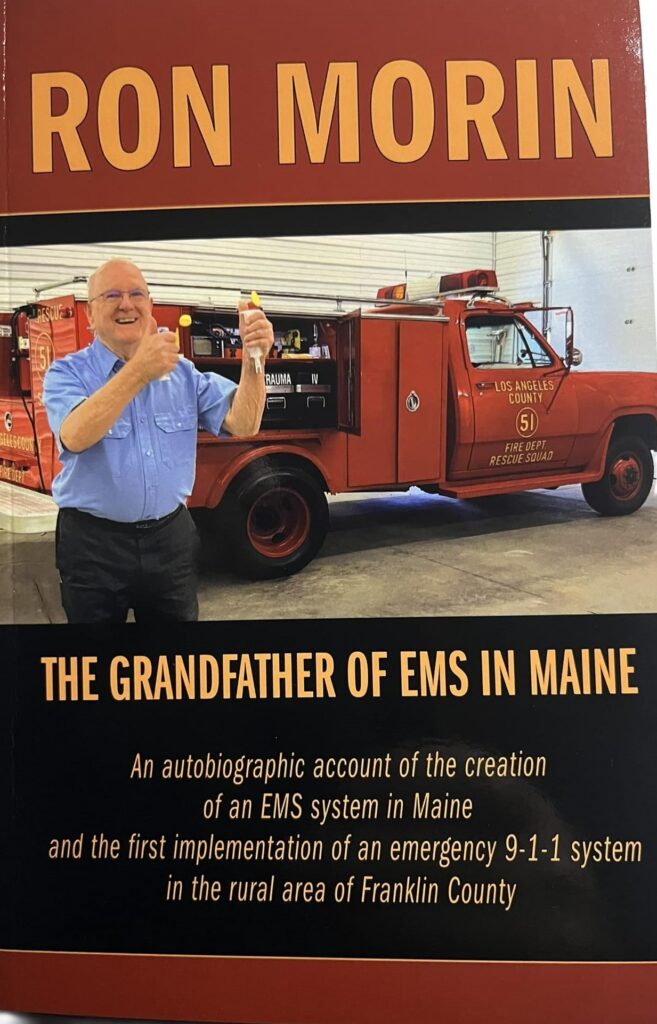
By Ron Morin, paramedic and cardiac arrest survivor
On August 14, 2020, Officer Nick D’Ascanio, South Portland Police, responded to a crash on Maine Mall Road for a report of a motor vehicle crash with injury. He was 30 seconds away!
I was that guy. I had lost consciousness and crashed into a car with two teenage girls, who were uninjured. The girls were outside of their vehicle, pointing towards my vehicle, reporting that I was inside of it.
Upon arriving, Officer D’Ascanio discovered that I had experienced a medical event prior to crashing, was not breathing and had no pulse. Knowing that the fire department paramedics were only a mile away, he removed me from the vehicle, found me in cardiac arrest and began CPR.
The Deputy Fire Chief, Bill Collins, who I have known for more than 25 years, was on his way home when he heard the radio call for a crash on Maine Mall Road. Being nearby, he decided to respond. He approached the scene and noticed my vanity plate. He then went to help Officer D’Ascanio administer CPR.
Within minutes, South Portland Fire Rescue arrived with a crew of five paramedics, and I was defibrillated, given epinephrine, defibrillated again, and now had a pulse.
I was transported to Maine Medical Center, 3.3 miles away, and was diagnosed with a “widow maker” heart attack. I was unconscious. I was in the “cath lab” within 38 minutes, receiving a stent in my left anterior descending (LAD) artery, which provides 50% of your heart muscle’s blood supply. Mine was 100% blocked. Immediate treatment is crucial for a chance of survival as studies show that less than 1% of the people who have a 100% blocked LAD survive
I was intubated, sedated, and received “Super Cool” hypothermia treatment, lowering my body temperature for 48 hours allowing my heart to heal. Maine Medical Center’s ICU implemented this new technology that cools the body temperature of a patient who has suffered a cardiac arrest. The procedure, therapeutic hypothermia, lowers the patient’s body temperature to protect the brain and other vital organs. It’s most often used to treat cardiac arrest victims who have been resuscitated in the field. Using a group of specially-trained CICU nurses — the “Super-Coolers’‘.
Unbeknown to me, my wife – who is an RN and a paramedic – had a meeting with the cardiology staff who introduced a new study of lowering body temperatures to allow the heart and brain to heal. Eligible patients for this trial will not have the capacity to provide informed consent. Written informed consent from a legally authorized representative was required.
Knowing that I liked to be “the first”, She authorized the medical staff to move forward with the procedure and the study. I was to be the first person in this study at Maine Medical Center called ICECAP, Influence of Cooling Duration on Efficacy in Cardiac Arrest Patients (ICECAP) for Out of Hospital Cardiac Arrest.
Maine Medical Center has led the way in the state and region with this life- and brain-saving intervention. The treatment reduces the mortality rate among cardiac arrest survivors by 35 percent and increases the chance of a good neurologic outcome by 39 percent.
On the third day, I was extubated and awoke to see my wife sitting by my bedside. I said, “What am I doing here?” as I had no recollection of the event, a “sudden death experience.”
Your heart’s ejection fraction (EF) compares the amount of blood in the heart to the amount of blood pumped out. The fraction or percentage helps describe how well the heart is pumping blood to the body. Normal EF ranges between 50% to 70%. Prior to the event I had an ejection fraction of 65%, post-event it was 25% and now – several months later – is back up to 65%.
Officer D’Ascanio’s quick actions saved my life that day. Later in the year, I went to the South Portland Police Department to present him and the South Portland Fire Department with an American Heart Association Heartsaver Award.
I continually make the point, early notification with 911 access, first responders trained to evaluate and start early CPR, followed by EMS professionals, quick action, leading to a system that moves people quickly to the operating room, followed by expert care provided the means for a successful recovery. I’m proud to tell others about the system that I helped to create and to see the results of a great EMS system that continues to evolve.