
On a fall afternoon in 2016, Vic Viktorov was on a tennis court at Brookline High School, trying to do something he hadn’t done in years: get in shape.
His twin daughters were on the court next to him, laughing with friends, while his wife watched from the sidelines. For Viktorov, then a 40-year-old management consultant who had spent two decades on airplanes and in boardrooms, it felt like a hopeful first step toward a healthier life.
Minutes into the warmup, his chest tightened. He sat down, winded. A crushing weight bore down on him.
“It felt like an elephant on my chest,” he recalled. “I couldn’t catch my breath.”
When paramedics arrived, they quickly realized he wasn’t simply out of shape. He was in the midst of what doctors call a “widow maker” heart attack — a blockage of the left anterior descending artery, with a fatality rate of more than 90 percent if untreated within 90 minutes.
“I was fully awake, even joking with the doctors as they wheeled me into the cath lab,” he said. “I didn’t realize how serious it was until they told me afterwards. That’s when I broke down. I felt ashamed. Guilty. Like I had done this to myself.”
A life lived at full speed
By then, the warning signs had been building for years.
Viktorov was born in Ukraine and came to the United States with his parents, who worked tirelessly to build a life for their children. He carried that ethic into his own career. By his 30s, he was a high-powered consultant and later a Fortune 300 executive, traveling constantly, eating poorly and working 70-hour weeks.
“I always knew heart disease ran in my family. My father died at 57 of a heart attack,” he said. “But I thought I had more time. Maybe until 60. I never thought it would happen at 40.”
When it did, the damage was severe: 30 percent of his heart muscle had died. For weeks afterward he wore a defibrillator vest in case his heart failed again. He completed rehab, often working out alongside patients twice his age, and struggled to find a routine that felt sustainable.
Rebuilding a life
The heart attack forced Viktorov to confront what his success had cost.
“On paper, I was living the dream,” he said. “But in reality, I was living to work, not working to live. I wasn’t happy. And if I didn’t change, I wasn’t going to be around to fix it.”
He sold his stake in his consulting firm, left corporate life and began searching for something that aligned with his values. He was drawn to health and fitness, a world he had long ignored, but quickly discovered how difficult it was to start over. At a traditional gym he struggled to find a trainer willing to work with someone who had survived a major heart attack, and on his own he often felt lost, unsure how hard to push or what exercises were safe.
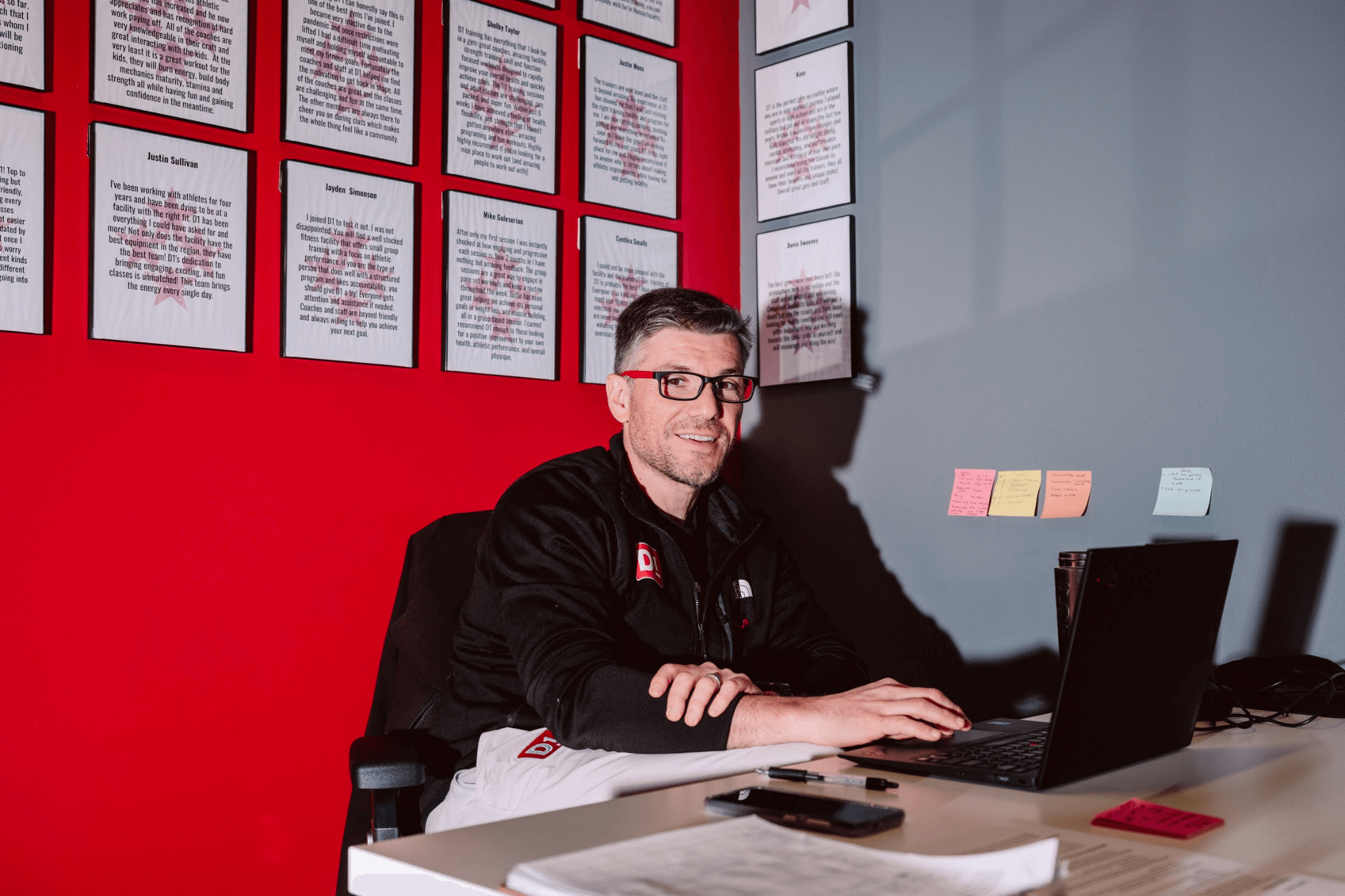
At the same time, he and his wife wanted to make health a priority, but with young children at home finding the time was difficult. He began to picture a place where families could be active together. That idea eventually led him to open a gym in Burlington, D1 Training, built around guided, coach-led workouts.
“Seventy percent of my heart survived that day,” he said. “And I’ve poured all of it into this.”

A new mission
Nearly a decade later, Viktorov, now 49, is lighter, fitter, and far more present in his own life. He cooks healthy meals, exercises with his family, and has discovered the simple joy of weekends at home. He also publicly shares his story to encourage others to recognize risks before it’s too late.
“I tell people, don’t be me,” he said. “It’s so easy to fall into the trap of constant work, constant stress, and ignoring your health. But none of that is worth it if you don’t get to live long enough to enjoy it.”
For Viktorov, the lesson is both humbling and liberating. Success, he says, isn’t titles or paychecks. It’s health, family and purpose.
“I’m healthier, happier, and more fulfilled than I’ve ever been,” he said. “And if my story convinces even one person to take their health seriously, then it was all worth it.”