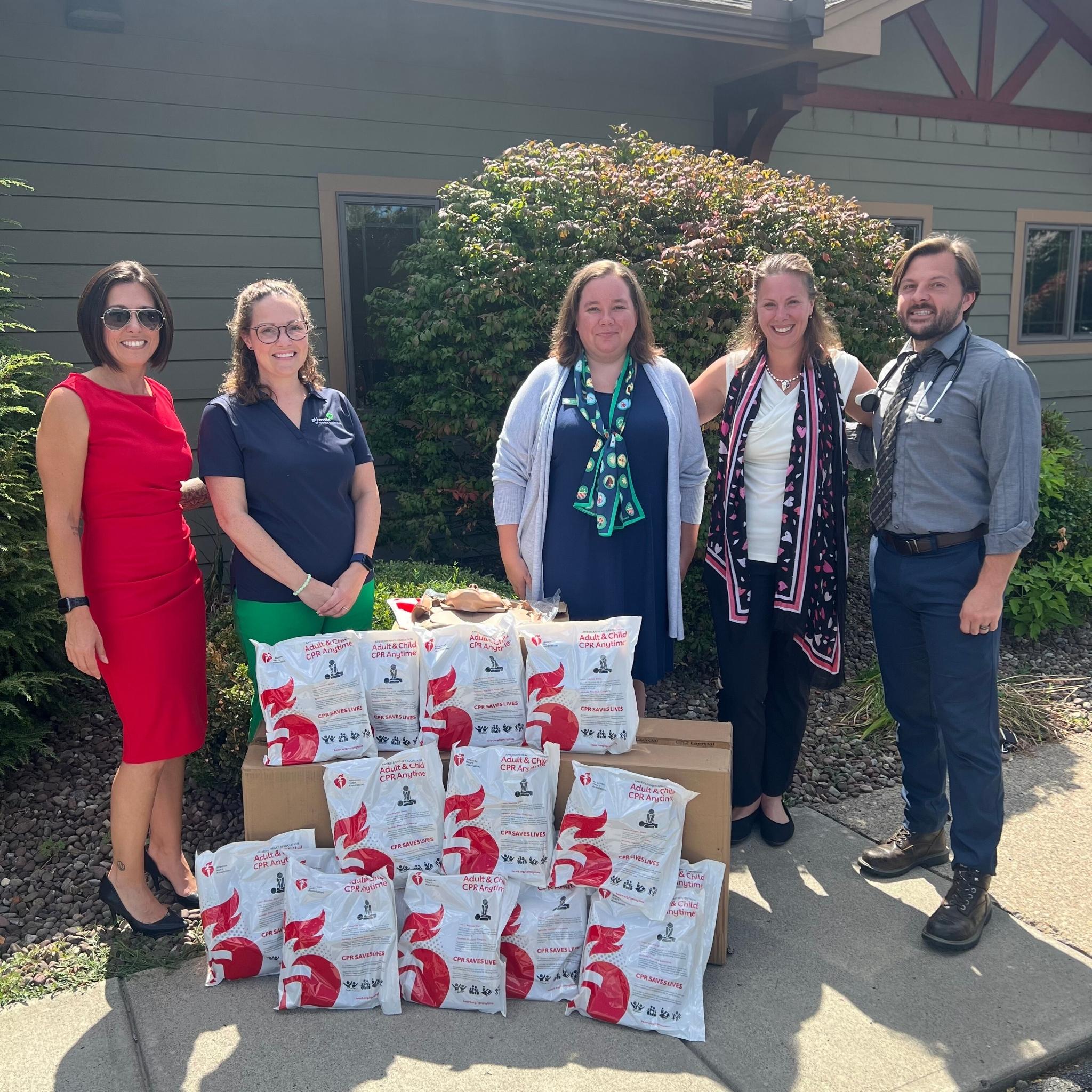
FamilyCare Medical Group and the American Heart Association provide Hands-Only CPR training equipment to community organizations
With nearly 3 out of 4 cardiac arrests outside of the hospital occurring in homes, knowing how to perform CPR is critically important[1]. CPR, especially if performed immediately, could double or triple a cardiac arrest victim’s chance of survival[2].
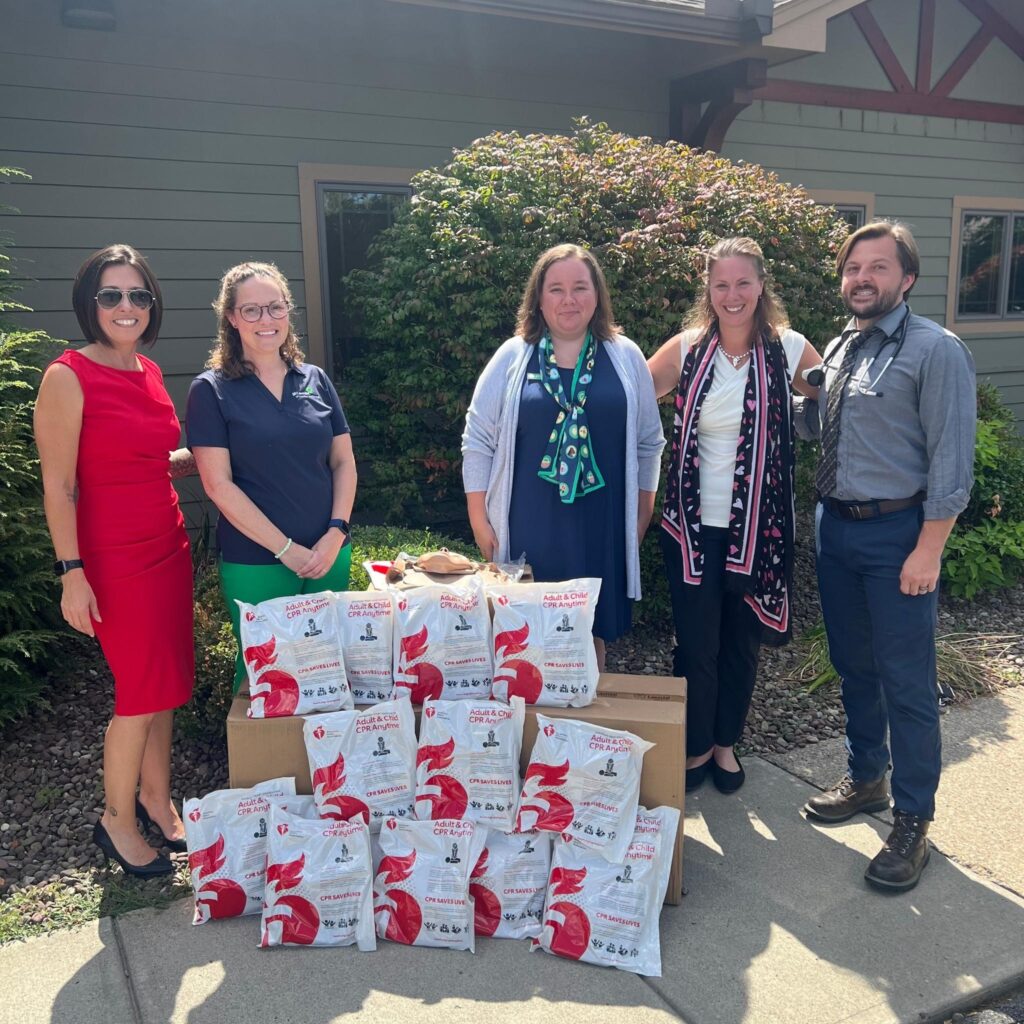
That is why the American Heart Association, a relentless force changing the future of health for everyone everywhere, and FamilyCare Medical Group, PC, are adding lifesavers to the chain of survival by providing Hands-Only CPR education resources through CPR Anytime® Training Kits. Thanks to support from FamilyCare Medical Group, PC, a total of 97 kits will be distributed throughout local YMCA locations and Girl Scouts of NYPENN Pathways.
The CPR Anytime Training Kits are intended for anyone who wants to learn about how to respond to a cardiac emergency. The kit teaches Hands-Only CPR and AED use, as well as other first aid emergencies like choking and bleeding. It includes a manikin, a replica automated external defibrillator (AED) to practice with, a storage bag and access to an interactive app to enhance the training experience. Learners can practice on the manikin while observing a demonstration of the skills by video.
“Every minute counts in a cardiac emergency” said Mike Kuhn, M.D., with FamilyCare Medical Group, PC. “Providing community organizations with a way to teach the lifesaving skills of Hands-Only CPR can help ensure more people are ready to act. Everyone everywhere can be prepared and empowered to become a vital link in the chain of survival and provide CPR.”
“Unfortunately, too many sudden cardiac arrest victims don’t get the help they need,” said Heather Evans, executive director of the American Heart Association in Central New York. “Knowing how to respond in a cardiac emergency when seconds matter can be the difference between life and death. Thanks to support from FamilyCare Medical Group, PC, we will be able to add hundreds of community members to the Nation of Lifesavers, so they can respond in those crucial first moments after cardiac arrest.”
Quick, simple and easy-to-learn, Hands-Only CPR has been shown to be as effective in the first few minutes as conventional CPR for cardiac arrest at home, at work or in public2F[3].
For more information on Hands-Only CPR, visit cpr.heart.org.
[1] https://www.ahajournals.org/doi/10.1161/CIR.0000000000001123?utm_campaign=2023stat-update&utm_source=heart&utm_medium=link&utm_content=statshome
[2] https://www.ahajournals.org/doi/10.1161/CIR.0000000000001052?utm_campaign=2023stat-update&utm_source=heart&utm_medium=link&utm_content=statshome
[3] https://www.ahajournals.org/doi/10.1161/CIR.0000000000001052?utm_campaign=2023stat-update&utm_source=heart&utm_medium=link&utm_content=statshome