American Heart Association teams with Brockton Public Library to bring free blood pressure checks and loaner cuffs to local residents
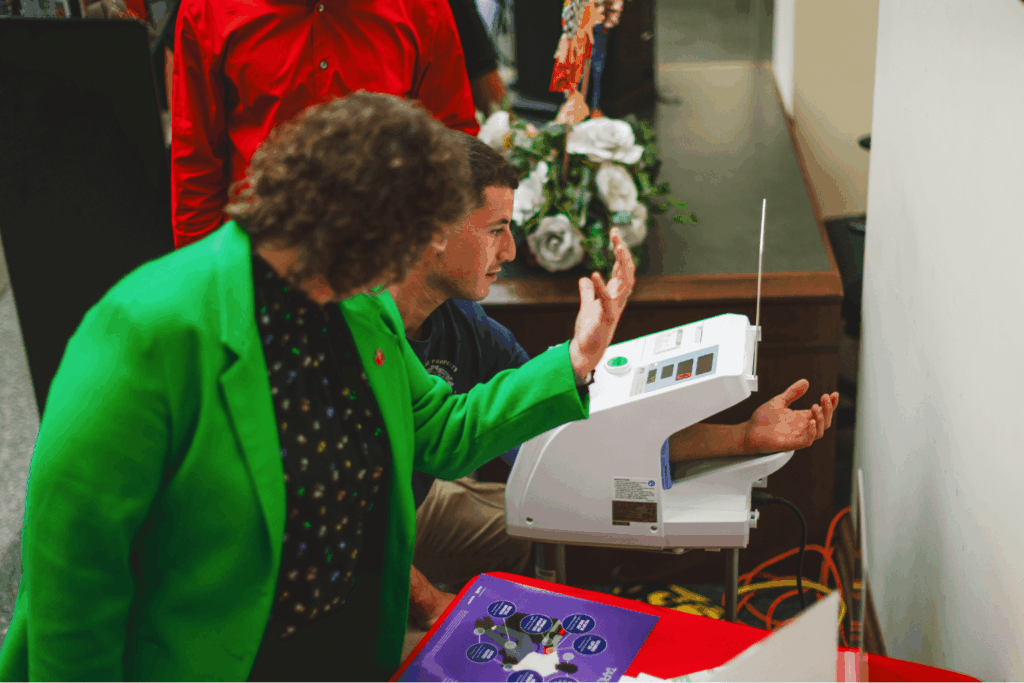
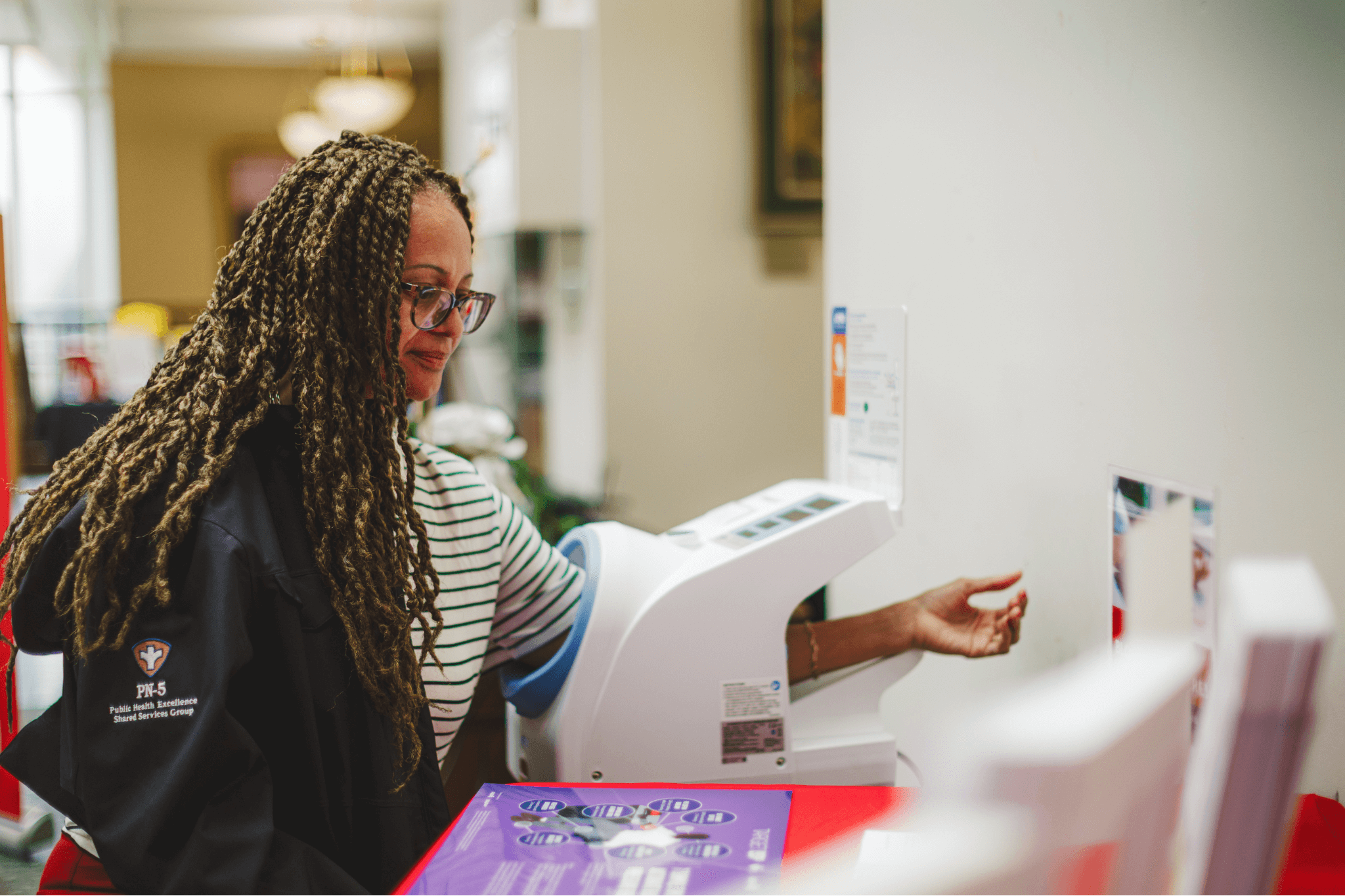
At the Thomas P. Kennedy Main Library, a familiar civic space has quietly expanded its mission. Alongside the shelves of novels and reference materials now sits a machine that could save lives: a self-service blood pressure station, free for any patron to use.
The unveiling marked the Brockton launch of Libraries with Heart, a program from the American Heart Association that brings vital health resources into trusted community spaces. Library visitors will now find a self-service blood pressure monitor in the lobby for quick checks on the spot. And with just a library card, residents can also check out a portable blood pressure cuff to track their numbers at home.
“It’s not every day that you walk into a library and walk out with tools to protect your health,” said Stephanie Voltaire, a community impact director with the American Heart Association in Greater Boston, during the event. “Nearly half of all American adults have high blood pressure, and many don’t even know it. The first step is simple: check your blood pressure and talk to your provider.”

For Brockton, where about 31% of residents report living with hypertension , the initiative addresses a critical need. High blood pressure, often called the “silent killer,” does not always cause symptoms but is a leading risk factor for heart disease and stroke. Nationwide, it affects more than 122 million adults .
Paul Engle, director of the Brockton Public Library, knows the stakes firsthand. Years ago, a routine physical revealed his own dangerously high blood pressure. He now tracks it daily at home.
“When Stephanie walked into my office to pitch this, it took about a second to say yes,” Engle said. “I know not everybody in Brockton can afford a cuff of their own. Having them in the library’s collection, and a station right here, is a valuable resource for the health of this community.”

The city’s Board of Health welcomed the move as well. Andrelyn K. Demosthene, a public health nurse, called the station “an empowering tool” that allows residents to monitor changes and prevent complications.
“Chronic diseases like hypertension are among the leading causes of death in the U.S.,” she said. “Regular monitoring gives people ownership of their well-being.”
The program is not meant to replace medical care. Instead, it’s a gateway. If a patron’s numbers are elevated, the library provides information on where to seek follow-up, including a referral pathway to the Brockton Neighborhood Health Center.
This is the second Massachusetts community to adopt “Libraries with Heart,” following a June rollout in Franklin. The Association plans a broader statewide expansion, positioning libraries as unexpected but logical partners in public health.
“Libraries are free, accessible, and deeply embedded in their communities,” Voltaire said. “They’ve always been places people turn to for trusted information. Now they can be places where people take the first step in protecting their heart.”
For Engle, the project reflects the library’s larger mission.
“We provide education and resources to people who might not be able to afford them otherwise,” he said. “This fits squarely into that mission. And if it helps even one person avoid what I went through, it’s worth it.”