
Mayor Muriel Bowser has proclaimed October 16, 2025, as “World Restart a Heart Day” in the District of Columbia.
More than 350,000 cardiac arrests occur annually in the United States, with up to 23,000 of those happening to people under 18 years old. In D.C. alone, nearly 1,000 cardiac arrests occur outside of a hospital each year with a less than 10% survival rate. Too often, cardiac arrests occur when children are away from trained teachers, coaches, or caregivers, making it critical for parents, guardians, and community members to be prepared to respond in an emergency. Bystander CPR and cardiac emergency response plans can double or even triple survival rates. In D.C., in instances where prompt CPR was administered before emergency responders arrived, survival rates increased to 45% in 2023.
On World Restart a Heart Day, the American Heart Association invites everyone to join the Nation of Lifesavers by attending the Greater Washington Region Heart Walk on Nov. 1, visiting heart.org/nation, learning CPR, and supporting public policies that increase survival from cardiac arrest
You can view the proclamation here.
The Cardiac Planning and Response “CPR” Act passed unanimously in the D.C. Council last year, ensuring that all District schools and school-based sports facilities are prepared to respond to cardiac emergencies.
These are some of the stories of local Washingtonians who have saved lives using CPR or survived cardiac arrest thanks to quick action from bystanders:
Jeff Bosick was a healthy 47-year-old father of three when on Father’s Day weekend in 2021 he went into sudden cardiac arrest. His wife Tracy called 911 and performed CPR for 10 agonizing minutes, saving his life. It turns out, Jeff had suffered from a nearly fatal combination of heart attack and cardiac arrest. In the aftermath, Jeff could hardly walk. Today, he’s made a full recovery. He’s a tech executive who served as the co-chair for the 2024 Greater Washington Heart Walk.

Bryan O. Buckley, DRPH, MPH was out for a bike ride with a friend on Three Notch Trail in Maryland when he saw someone collapse. Bryan and two other bystanders acted fast, providing 20 minutes of CPR to Christopher Holton, saving Chris’ life. More recently, Bryan’s sister Christina Buckley also took an active bystander role when a fellow bus passenger had seizures followed by a cardiac arrest. Christina called 911 and did CPR on the woman, who regained consciousness before first responders arrived.
Mary Gordon was healthy, fit and in her 30s in 2019 when the holiday season brought increasingly concerning symptoms, culminating in a cardiac arrest in the lobby of the doctor’s office where she’d been seeking answers. Luckily, the staff onsite administered CPR and an AED and she was rushed to a hospital where she learned she had a rare heart condition, received emergency surgery and started the road to recovery. A post recovery milestone turned extra momentous. After a three-mile hike up her favorite trail in Shenandoah, Gordon’s now husband, Matt Costakis, got down on one knee and proposed. Mary now raises awareness about CPR and the difference between heart attack and cardiac arrest.
Krysta Pearce, was a 30-year-old social worker undergoing a minor hip surgery when her heart stopped on the operating table; the incident was known as “Broken Heart Syndrome,” caused by stress. After surviving this near-death experience, she highlights the importance of managing stress and advancing research and treatment for heart health.
Jeff Roth is a local executive who suffered a sudden cardiac arrest while on a run – also near the U.S. Capitol. Visiting tourists spotted him and flagged down a traffic officer, who performed CPR until medical help arrived. Thanks to this instant response, Jeff survived and helps lead company recruitment efforts for the Greater Washington Heart Walk.
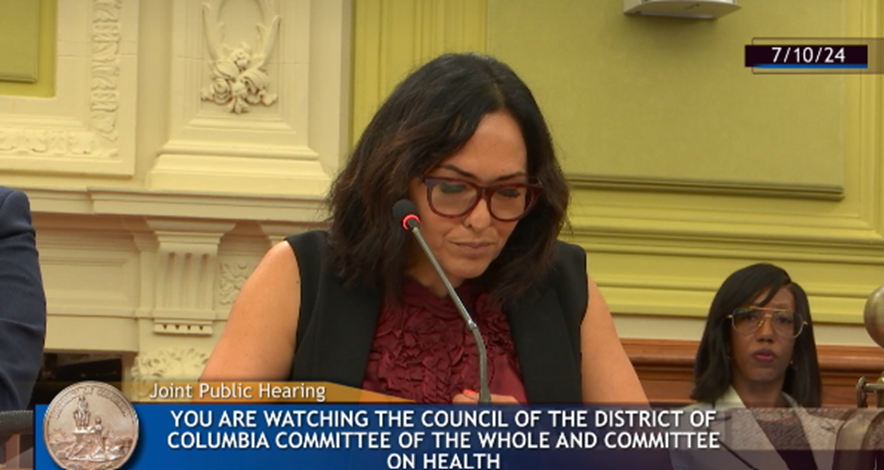
Delya Sommerville, a public health leader and mom of two, went into cardiac arrest in 2021 while she was on a run at the U.S. Capitol. She was found unconscious by a member of Congress, who contacted Capitol Police, and officers administered CPR and an AED to save her life. In the years since, Delya’s advocacy helped pass the CPR Act in D.C., requiring schools to have cardiac emergency response plans.
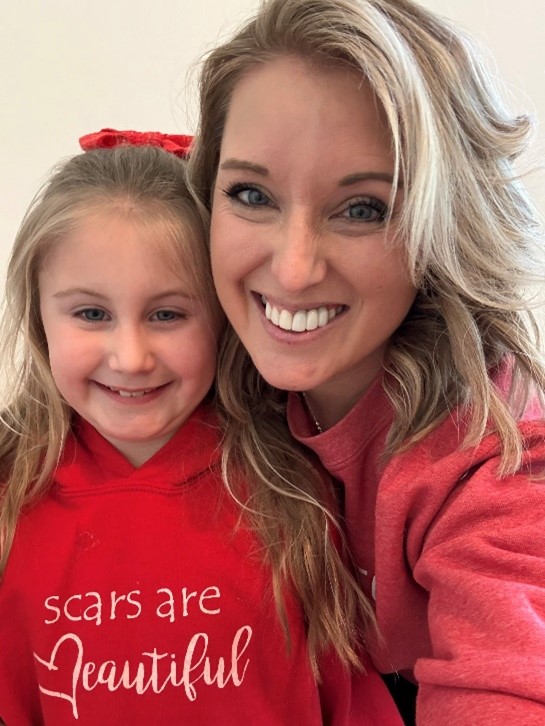
Aubrey Spiess was born with coarctation of aorta, mitral valve stenosis, and a severely large ventricular septal defect (a hole in her heart). When she was just 10 days old and less than 4 pounds, her heart was the size of a walnut and required surgery. Her chances of survival were not optimal given her size and her heart’s condition. When Aubrey seemed stable post-operation, her parents left just to shower, and in that short time, she went into cardiac arrest. Doctors performed CPR on Aubrey for 15 minutes; she survived and her heart stabilized again. Today, Aubrey is a thriving second grader and Youth Heart Ambassador. With her classmates and her mom, Ashley, she’s on a mission to teach 100 classmates hands-only CPR.