During Stroke Awareness Month, a Caretaker of the Torch from the Rochester Heart Ball shares how acronym ‘B.E. F.A.S.T.’ can save a life.
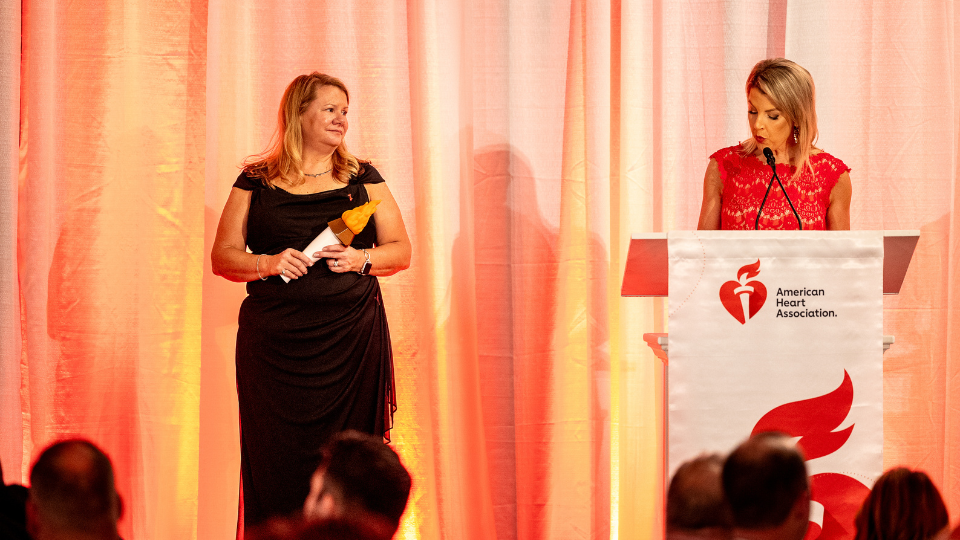
As a Caretaker of the Torch at this year’s Rochester Heart Ball, Sue Rodeman represented survivors, families and advocates who are helping move the American Heart Association’s mission forward. But what many didn’t know until recently is that Sue is also a stroke survivor.
In 2011, at just 40 years old, Sue was finishing her workday when something felt “off.”
“I couldn’t get the keyboard to work,” she said. “The words I was trying to type just wouldn’t come out.”
Then came the moment that changed everything.
“I went to the bathroom and saw one side of my face drooping. I remember thinking, ‘I can’t be having a stroke.’”
But she was.
As her symptoms worsened, Sue struggled to call her husband, and when she finally did, she couldn’t speak clearly. A colleague noticed something was wrong and helped call 911.
By the time Rodeman arrived at the hospital, many of her symptoms had subsided. Still, doctors confirmed she had experienced a stroke.
“I was incredibly lucky,” she said. “I had no lasting effects.”
While Sue didn’t realize it in that moment, she was experiencing common stroke symptoms that can be recognized with the acronym B.E. F.A.S.T.:
- Balance Loss – Sudden trouble walking, dizziness, or loss of balance or coordination
- Eye (or Vision) Changes – Sudden vision loss or trouble seeing in one or both eyes
- Face Drooping – One side of the face droops or feels numb; a smile may look uneven
- Arm Weakness – One arm feels weak or numb or drifts downward when raised
- Speech Difficulty – Slurred speech or trouble speaking
- Time to Call 911 – If someone shows any of these symptoms, even if the symptoms go away, call 911 to help get care started. Check the time so you’ll know when the first symptoms appeared.
Rodeman experienced several of these warning signs in real time—face drooping, arm/hand difficulty and speech challenges—and, importantly, recognized that something was wrong.
Because she acted quickly and got help, she received care within a critical window and avoided long-term damage.
Her story is a powerful reminder that strokes can happen suddenly, and recognizing the signs can change everything.
After her stroke, Rodeman learned it was caused by a condition she never knew she had: a small hole in her heart, called a PFO (patent foramen ovale). It’s something people can live with for decades without symptoms—and often isn’t discovered until something happens.
“You can’t control being born with a heart defect,” Sue said. “But you can control what you do next.”
Today, she focuses on her health and prevention, doing what she can to reduce her future risk.
Rodeman’s connection to the American Heart Association began through her professional involvement, where she helped lead Rochester Heart Walk & Run efforts and engage others in the mission.
What began as a professional connection quickly became deeply personal.
“It almost felt serendipitous,” she said.
Her experience, combined with her family’s history of cardiovascular disease, strengthened her commitment to making a difference and eventually led her to deeper involvement, including serving on the board of directors of the American Heart Association in Rochester.
For years, Rodeman kept her stroke experience private.
“I didn’t really talk about it,” she said. “I don’t know why.”
But after hearing another survivor speak openly about their journey, something shifted. Now, Rodeman uses her voice, because she knows that sharing stories can save lives.
At the Heart Ball, the Torch that Rodeman lifted high during the program represents hope, progress and the lives impacted by heart disease and stroke.
As a Caretaker of the Torch, Rodeman embodies all three:
- She is a survivor who acted quickly.
- A leader who turned experience into purpose.
- And now, an advocate helping others recognize the signs and take action.
Stroke can happen to anyone—even someone who is healthy, active and only 40 years old.
But knowing the signs and acting fast can make all the difference.
“If sharing my story can help someone else,” Rodeman said, “that’s what matters.”
This May, during American Stroke Month, The American Stroke Association is calling on everyone to learn the stroke warning signs and how to prevent a future stroke.
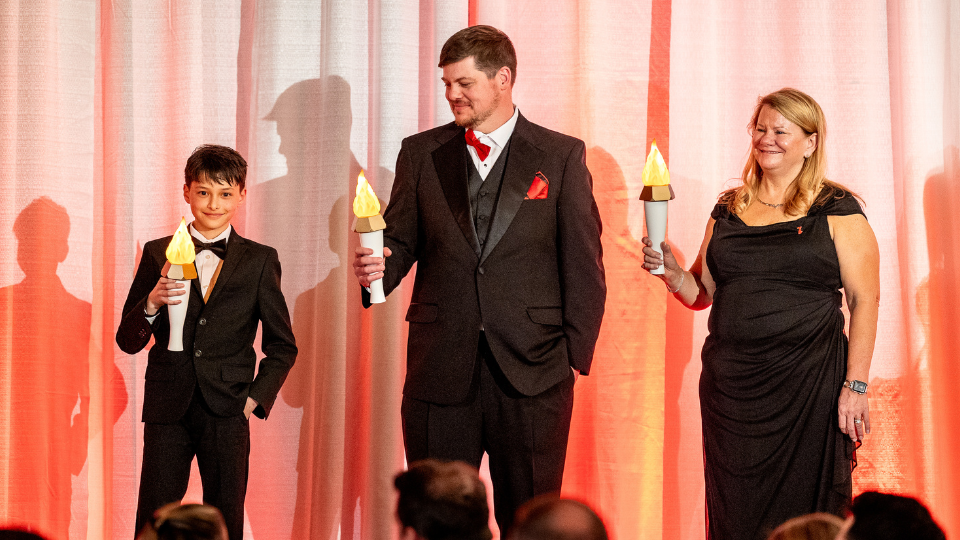
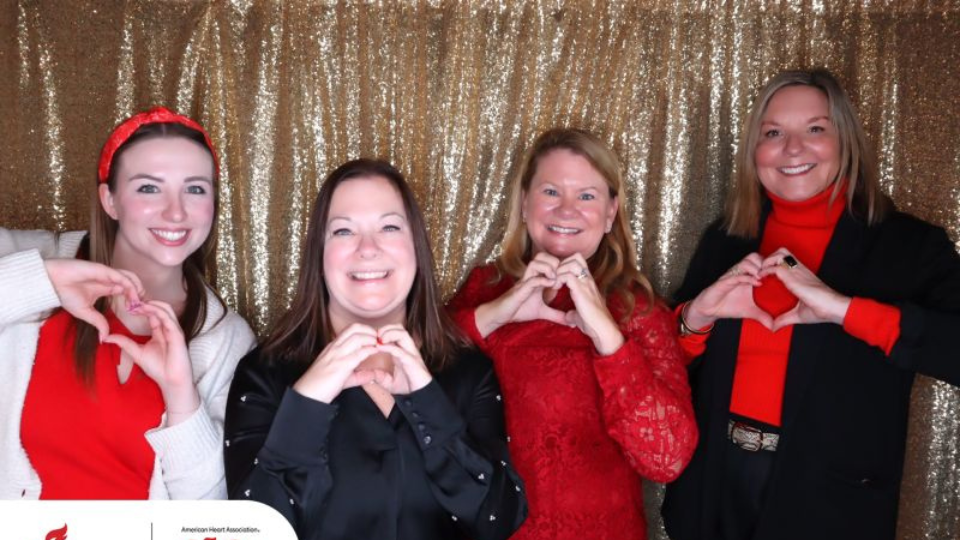
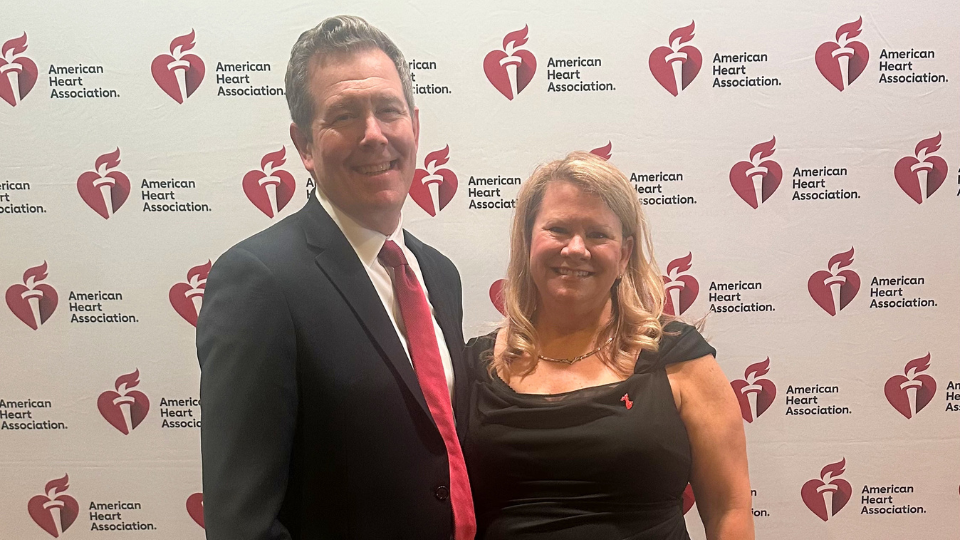
This is the first in a series highlighting the survivors and honorees behind the 2026 Rochester Heart Ball, each carrying the Torch in their own powerful way.