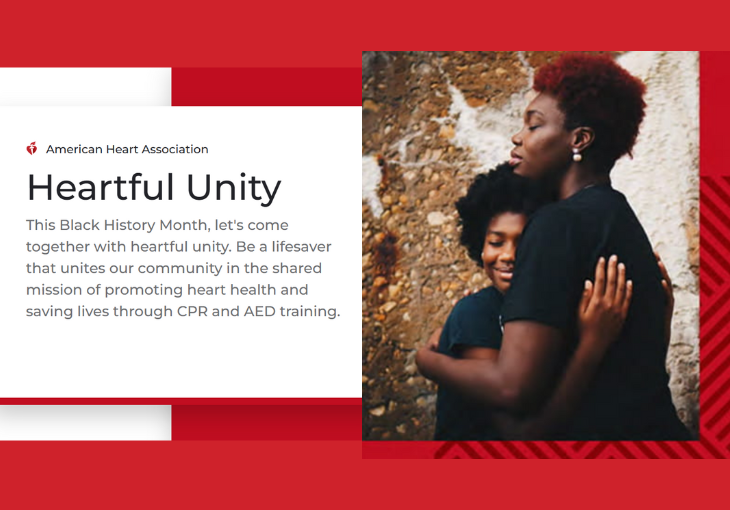
Joining the Nation of Lifesavers™ will train bystanders to become first responders until help arrives
HAMPTON ROADS, Va., February 5, 2026 — The American Heart Association’s 2025 Heart Disease and Stroke Statistical Update shows that while meaningful progress continues in reducing cardiovascular and cerebrovascular health disparities, Black communities in the United States still face disproportionately higher rates of heart disease, stroke and hypertension.[1] These persistent gaps contribute to significantly higher mortality rates, underscoring the urgent need for sustained, community‑centered intervention.
As part of its nationwide Heart Month and Black History Month initiatives, the American Heart Association, devoted to creating a world of longer, healthier lives for all, is calling for renewed action to close the survival gap through education, advocacy and to learn Hands‑Only CPR. The Association’s mission remains clear: ensuring that every person, especially those at greatest risk, has the opportunity to thrive.
In Hampton Roads specifically, the American Heart Association is collaborating with Hampton University student Zoe Duncan to share a unique point of view from fellow peers how cardiovascular disease and stroke have affected their own lives. Zoe, in collaboration with the American Heart Association – Hampton Roads developed #KnowHerStory, a digital campaign showcased during American Heart Month and Black History Month to showcase the survivors and stories behind the alarming statistics of cardiovascular disease and stroke being the No. 1 and No. 4 killers nationwide.
Addressing the Disproportionate Burden of Cardiovascular Disease
Cardiovascular disease (CVD) remains the leading cause of death in the United States.[2] According to the Association, Black Americans continue to experience some of the nation’s most severe CVD outcomes, driven in part by the high prevalence of risk factors such as hypertension, diabetes and limited access to preventive care.
Key findings from the 2025 Statistical Update include:[3]
- CVD Prevalence: Nearly 60% of Black adults aged 20 and older live with some form of CVD, including coronary heart disease, heart failure, stroke or hypertension, compared with roughly half of all U.S. adults.
- Stroke Disparities: Stroke prevalence remains highest among Black women and men, significantly exceeding national averages.
- Hypertension Crisis: Black adults continue to experience some of the highest hypertension rates in the world, contributing to elevated risks of stroke, heart attack and kidney disease.
- Heart Failure Burden: Black adults account for more than half of heart failure hospitalizations among Americans under age 50.
“The science shows that Black communities continue to face disproportionate risks of heart disease, stroke and other cardiovascular conditions,” said Jaylyn Brown, executive director of the American Heart Association – Hampton Roads. “But data alone won’t drive change. Real progress happens when we work hand‑in‑hand with communities to co-create solutions that address the root causes of these increased risks. Through Hands‑Only CPR, health care advocacy and culturally relevant education, we are committed to changing the future of heart health.”
Act and Become a Lifesaver
This February, the Association is urging families, schools and community organizations to learn Hands‑Only CPR and join the Nation of Lifesavers™ movement. With nearly 90% of out‑of‑hospital cardiac arrests resulting in death,[4] CPR can double or triple a person’s chance of survival. Yet only 46% of cardiac arrest victims receive CPR from a bystander — and bystander CPR is significantly less likely when the person is Black or Hispanic.[5]
“Learning Hands‑Only CPR is a simple, powerful way to save a life,” said Brown. “Black History Month reminds us of the strength and resilience of Black communities, while also highlighting the urgent need to become the first responder until help arrives. Through the Nation of Lifesavers™ movement, we’re equipping people with lifesaving skills and working to ensure that every community has a better chance at survival.”
The Association’s Commitment to Closing the Health Gap
To address longstanding inequities, the American Heart Association is advancing initiatives that:
- Expand CPR Education in Black Communities — Encouraging every household to have at least one person trained in Hands‑Only CPR.
- Improve Access to Hypertension Management — Promoting early detection, treatment and long‑term control of high blood pressure.
- Increase Stroke Prevention Efforts — Offering tools and education on lifestyle changes, warning signs and emergency response.
- Advocate for Better Healthcare Policies — Supporting policies that expand access to high‑quality cardiovascular care and community‑based screenings.
Expanding Heart Health Awareness
To ensure heart health education reaches those most affected, the Association continues to collaborate with Black‑led organizations, Historically Black Colleges and Universities (HBCUs) and community leaders to develop culturally relevant, community‑driven solutions.
Highlighted initiatives include:
- EmPOWERED to Serve Business Accelerator™ — A remote training and grant program supporting entrepreneurs developing breakthrough health solutions.
- Heart of Innovation HBCU Challenge — A business accelerator for HBCU students and alumni creating technologies that address social drivers of health and improve cardiovascular outcomes.
- HBCU Scholars Program — Designed to increase the number of HBCU students entering biomedical and health science graduate programs.
- Well‑Being Works Better™ — A collaboration with the Deloitte Health Equity Institute and the SHRM Foundation to equip employers with tools to improve workforce health and well‑being.
- Social Impact Funds — Including the Bernard J. Tyson Impact Fund, which invests in underfunded social enterprises advancing optimal health and well-being. Since 2018, these funds have supported more than 100 community‑based organizations nationwide.
As the nation observes Heart Month and Black History Month, the American Heart Association is calling on individuals, community leaders, policymakers and partners to join in advancing fair access to heart-healthy resources. The path to longer, healthier lives for all requires sustained collaboration, culturally grounded solutions and a shared commitment to removing barriers that have persisted for generations. Together, we can build a future where every person, regardless of race, ZIP code or income, has a real opportunity for heart health and survival.
Additional Resources:
- For more information about the Nation of Lifesavers™, visit this website.
- Understanding the importance of the lay responder experience in out-of-hospital cardiac arrest: A scientific statement from the American Heart Association
- Difference in cardiac arrest vs. heart attack
- Learn Hands-Only CPR/use an AED (English, Spanish, Mandarin)
- AHA health information: Bystander CPR
- AHA health information: Bystander CPR Infographic
- AHA health information: Hands-Only CPR Resources
- Follow AHA/ASA news on X @HeartNews
###
About the American Heart Association
The American Heart Association is a relentless force for a world of longer, healthier lives. Dedicated to ensuring equitable health in all communities, the organization has been a leading source of health information for more than one hundred years. Supported by more than 35 million volunteers globally, we fund groundbreaking research, advocate for the public’s health, and provide critical resources to save and improve lives affected by cardiovascular disease and stroke. By driving breakthroughs and implementing proven solutions in science, policy, and care, we work tirelessly to advance health and transform lives every day. Connect with us on heart.org, Facebook, X or by calling 1-800-AHA-USA1.
For Media Inquiries:
Jaylyn Brown: 443-866-7733; jaylyn.brown@heart.org
For Public Inquiries: 1-800-AHA-USA1 (242-8721)
heart.org and stroke.org
[1] Cardiovascular Diseases in African Americans: Fostering Community Partnerships to Stem the Tide – PMC
[2] Heart disease remains leading cause of death as key health risk factors continue to rise | American Heart Association
[3] 2025 Heart Disease and Stroke Statistics: A Report of US and Global Data From the American Heart Association | Circulation
[4] Martin et. al. 2024 Heart disease and stroke statistics: a report of U.S. and global data from the American Heart Association. Circulation. 2024;149(8):e347-e913. doi: 10.1161/CIR.0000000000001209.Martin et. al. 2024 Heart disease and stroke statistics: a report of U.S. and global data from the American Heart Association. Circulation. 2024;149(8):e347-e913. doi: 10.1161/CIR.0000000000001209.
[5] Black, Hispanic adults less likely to receive CPR, especially in public | American Heart Association