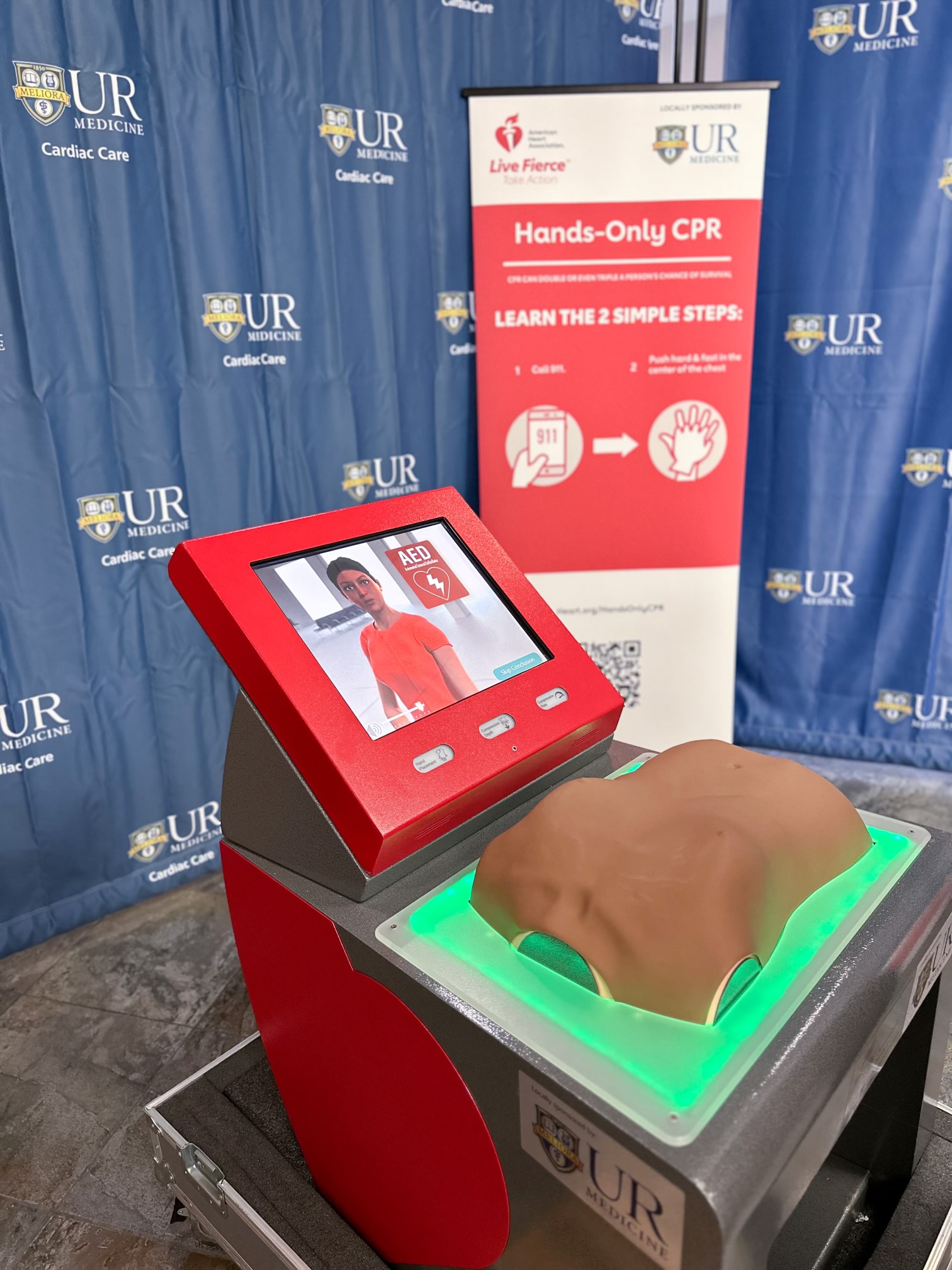
An estimated 90% of people who experience a cardiac arrest outside of a hospital setting do not survive it, according to the American Heart Association. With support from sponsor University of Rochester Medicine, the Association is working tirelessly to improve those statistics.
The American Heart Association and URochester Medicine are extending and expanding a successful program educating people on how to respond quickly with cardiopulmonary resuscitation, or CPR, when a cardiac emergency occurs. Through this new collaboration, New York’s first mobile Hands-Only CPR kiosk will continue to circulate through Rochester and the Finger Lakes for another three years. New this year, URochester Medicine will also support Cardiac Emergency Response Plans in the community to help ensure organizations are prepared to respond with lifesaving measures.

The kiosk, which debuted in July 2023, brings CPR education to the community. It includes a touchscreen and a rubber torso manikin. Users can view a short training video, then practice compressions to get real-time feedback on elements of quality CPR, including hand placement and compression depth and rate. Users even receive a score to make the experience entertaining as well as educational. Over the last three years, the kiosk has been in several locations, including Buffalo Bills Training Camp, Central Library of Rochester and Monroe County, EastView Mall, ESL Ballpark, Strong Memorial Hospital, His Branches Community Health Center and more. Overall, nearly 20,000 people have practiced Hands-Only CPR with the kiosk since its introduction.
“It takes the entire community to save lives during cardiac arrest. Working with the Heart Association, URochester Medicine is dedicated to expanding opportunities to educate people of all ages across our region to perform lifesaving CPR,” said Stephanie VonBacho, EdD, MSEd, MS, RN, NEA-BC, senior director of Learning and Development for the University of Rochester and URochester Medicine.
In addition to training residents, the new collaboration will focus on community organizations. Each year, the American Heart Association and URochester Medicine will guide three community organizations through the creation of a Cardiac Emergency Response Plan, or CERP. A CERP is a detailed, coordinated and practiced protocol that establishes specific steps to reduce death from cardiac arrest, ensuring that panic or chaos does not hinder response. As part of the process of building a CERP, each organization will receive an automated external defibrillator (AED), full CPR training and equipment to practice their emergency response throughout the year.
“Preparation is key to saving lives,” said Shane Grant, American Heart Association advisory board chairwoman. “Implementing a Cardiac Emergency Response Plan, like the ones that will be created thanks to this program, can increase survival rates from cardiac arrest by 50% or more by enabling a trained lay-responder team to take action.”
Through its Nation of Lifesavers program, the Association wants to turn bystanders into lifesavers, so that when a cardiac emergency occurs, anyone, anywhere is prepared and empowered to become a vital link in the chain of survival and provide CPR.
“The American Heart Association has set a goal of doubling the survival of cardiac arrest by 2030,” said Megan Vargulick, executive director of the American Heart Association in Rochester. “We know that in order to save more lives from the 350,000 cardiac arrests that occur outside of the hospital every year, we must increase the number of people who respond to cardiac arrest by calling 911, delivering high-quality CPR and getting and using an AED as soon as it is available. Collaborations like this are how we can make that impact.”
The expanded collaboration also includes a campaign focused on maternal health. Cardiovascular disease is the No. 1 killer of new moms and sometimes the risks can last for months postpartum. Research shows that certain conditions during pregnancy increase the lifetime risk of cardiovascular disease for both moms and their babies for the rest of their lives.
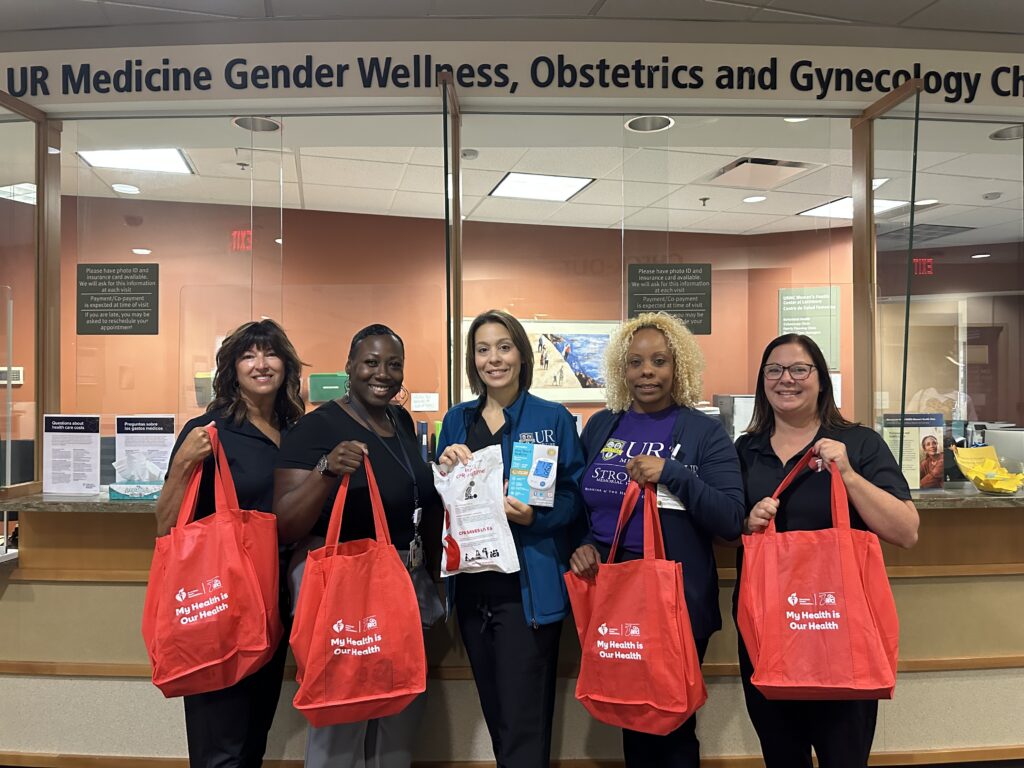
Over the next three years, the two organizations will lead an educational campaign, providing direct impact for local families through “New Mom Kits.” These kits include a blood pressure cuff so moms can monitor their blood pressure at home, an Infant CPR Anytime kit to ensure caregivers are trained to perform CPR, and resources related to care and local services including Medicaid, WIC and more. On Tuesday, the Heart Association delivered 25 kits to University of Rochester Medicine Gender Wellness, Obstetrics & Gynecology.
“This collaborative effort will have tremendous impact on multiple levels as we work to improve cardiac arrest survival,” VonBacho said.