by Keith Foisset, Jr.
When I sat in the emergency room as a 15-year-old, I didn’t know what to expect from the throbbing pain in my head. I was confused and scared. Just three days earlier, I had felt my left arm go numb and lost coordination. I was later diagnosed with a right parietal ischemic infarct—an ischemic stroke. The diagnosis was shocking to my family and me, and it was later confirmed the stroke was primarily caused by a congenital heart defect.
The rehabilitation that followed was difficult. Recovering while balancing high school and sports was daunting. Presentations that I used to excel at were a struggle, as I had trouble finding words in the months after the stroke. My body was constantly inflamed and my attention span diminished. But day by day, I started to recover and returned to baseball just six weeks later.
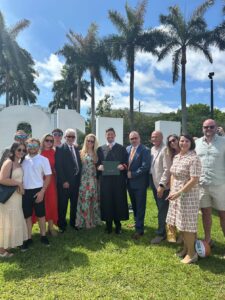
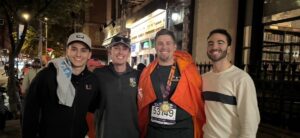
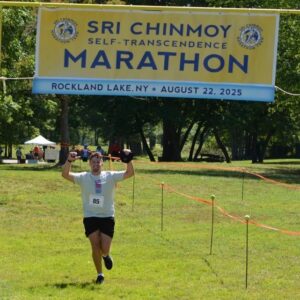
I am still grateful for the spectacular support system I had in my family and friends and for my faith, which strengthened me through this trying time. Today, I am completely recovered with no residual deficits. I have run two marathons and three half marathons since then and am starting my first year of medical school this fall, where I hope to give back the same outstanding care I received from my care team seven years ago.
Cardiovascular disease is no stranger to my family. My grandmother passed away after her second heart attack in 2021 and my grandfather also suffered a stroke. My father, who is thriving now, needed four stents at the age of 49.
Before my stroke, I had no idea that a 15-year-old could even have one. That experience gave me a new perspective on health and life itself. Stroke does not discriminate. Stroke can happen to anyone at any age and at any time, and every second counts when symptoms appear. The American Heart Association urges everyone to learn the acronym B.E.F.A.S.T. to recognize the warning signs of stroke: Balance loss, Eyesight changes, Face drooping, Arm weakness, Speech difficulty and Time to call 911. Recognizing these signs and acting quickly can mean the difference between recovery and lasting damage.
May is American Stroke Month, making this cause even more urgent and personal.
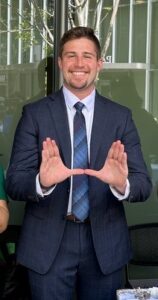
Last year, I was a student panelist at the inaugural Heart Ball at my alma mater, the University of Miami. It was there that I met a representative of the American Heart Association and our conversation inspired me to become more involved. This year, I am proud to serve as the featured survivor and red cap ambassador for the 2026 Fairfield Heart Walk & 5K Run on Saturday, May 9, at Sherwood Island State Park in Westport, Conn. I want to share my story so that others understand the warning signs and the silent nature of cardiovascular disease.
My name is Keith Foisset Jr. and I hope my journey serves as a reminder that stroke can happen to anyone—and that awareness, education and action can save lives. I invite you to join me at the Fairfield Heart Walk & 5K Run on May 9. Together, we can build a community of lifesavers.
N.B.: Keith Foisset Jr. is the 2026 Fairfield Heart Walk & 5K Run featured survivor and red cap ambassador. He is a stroke survivor, marathon runner and incoming medical student. The views and experiences shared here are his own.