American Heart Association reminds communities during CPR & AED Awareness Week, the power to save a life is in your hands
Sudden cardiac arrest can happen anytime, anywhere, and too often people hesitate to step in because they believe CPR can only be performed by medical professionals. During CPR and AED Awareness Week, the American Heart Association, devoted to changing the future to a world of healthier lives for all, is working to change that misconception and empower everyday people to act when it matters most.
According to the Association, more than two in three people in the U.S. believe only people with special training should perform CPR[1], a mistaken belief that contributes to the low survival rate of sudden cardiac arrest. If performed immediately, CPR can double or even triple a person’s chance of survival[2], and hesitation can cost lives. During CPR & AED Awareness Week, June 1-7, the American Heart Association is reminding families and communities, you don’t need to wear scrubs or have a medical background to save a life. You just need the courage to act.
Heading into summer, the Association offers this checklist for families, workplaces and other communities to take health and safety into your own hands:
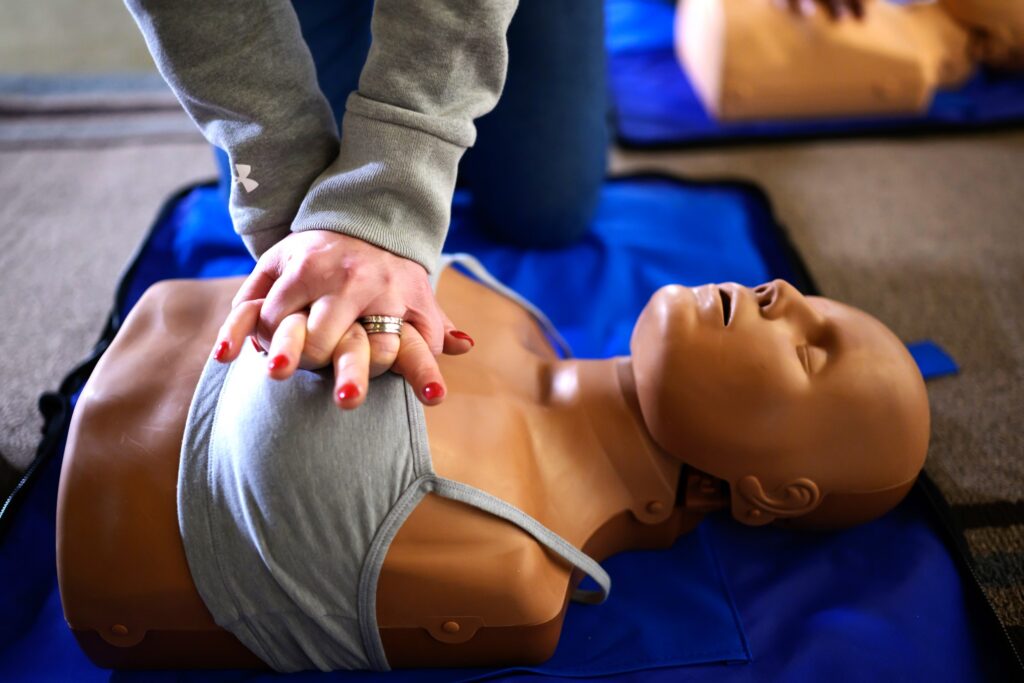
- Learn CPR and join the Nation of Lifesavers™. In Buffalo, families can watch a 60-second video to learn Hands-Only CPR for adults or this video to learn how to save an infant or child using CPR with breaths. For groups and individuals who want more comprehensive training, discover the right course with the Association’s CPR course catalog. Travelers can also get trained in Hands-Only CPR in about five minutes with a Hands-Only CPR Kiosk, located in many airports and public spaces across the country. For more information on how to learn CPR, visit heart.org/nation.
- Plan ahead. Summer is often a time for welcome disruptions. School is out, and it’s time for parties, camps and family trips. Checkif your summer destination has a cardiac emergency response plan (CERP). A CERP establishes specific steps to reduce death from cardiac arrest in any setting — be it a school, community organization, workplace or sports facility.
- Join the Buffalo Heart Walk. Every walker who joins and every dollar donated means more people trained in lifesaving CPR, more lifesaving research funded and longer, healthier lives for everyone in the Buffalo area. Learn more and get involved in the Buffalo Heart Walk at Heart.org/BuffaloWalk.
“Life can be unpredictable at times, and one way you can take control is by being prepared in an emergency,” said Megan Vargulick, executive director for the American Heart Association, Western New York. “Cardiac arrest doesn’t wait. It can happen to anyone at any time. When it does, that person is reliant on the people around them to be calm, be prepared and be ready to step in. This CPR Week, we’re reminding Western New York that ordinary people have extraordinary power to save a life.”
More than 350,000 out-of-hospital cardiac arrests occur in the United States each year[3], and 90% of people will not survive. Join the Nation of Lifesavers to help ensure everyone, everywhere has the best chance to survive cardiac arrest.
The American Heart Association is committed to turning a nation of bystanders into lifesavers. The long-term goal: to ensure that in the face of a cardiac emergency, anyone, anywhere, is prepared and empowered to perform CPR and become a vital link in the chain of survival.
For additional ways to raise awareness during National CPR & AED Awareness Week, visit heart.org/nation. Nation of Lifesavers is nationally sponsored by Walgreens.
[1] American Heart Association Annual CPR Perceptions Survey. Available upon request.
[2] Del Rios M, Bartos JA, Panchal AR, Atkins DL, Cabañas JG, Cao D, Dainty KN, Dezfulian C, Donoghue AJ, Drennan IR, Elmer J, Hirsch KG, Idris AH, Joyner BL, Kamath-Rayne BD, Kleinman ME, Kurz MC, Lasa JJ, Lee HC, McBride ME, Raymond TT, Rittenberger, JC, Schexnayder SM, Szyld E, Topjian A, Wigginton JG, Previdi JK. Part 1: executive summary: 2025 American Heart Association Guidelines for Cardiopulmonary Resuscitation and Emergency Cardiovascular Care. Circulation. 2025;152(suppl):S284–S312. doi: 10.1161/CIR.0000000000001372
[3] Heart Disease and Stroke Statistics—2022 Update: A Report From the American Heart Association, Table 19-2 https://www.ahajournals.org/doi/epub/10.1161/CIR.0000000000001052