




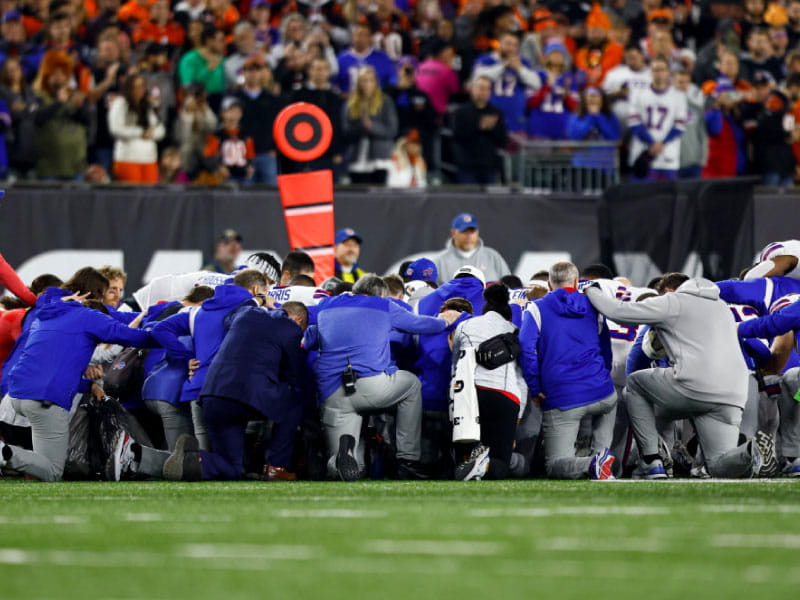
While playing in the Buffalo Bills – Cincinnati Bengals game on Monday Night Football on January 2, Bills player Damar Hamlin suffered cardiac arrest after a hit and was administered CPR on the field before being transferred to an area hospital.
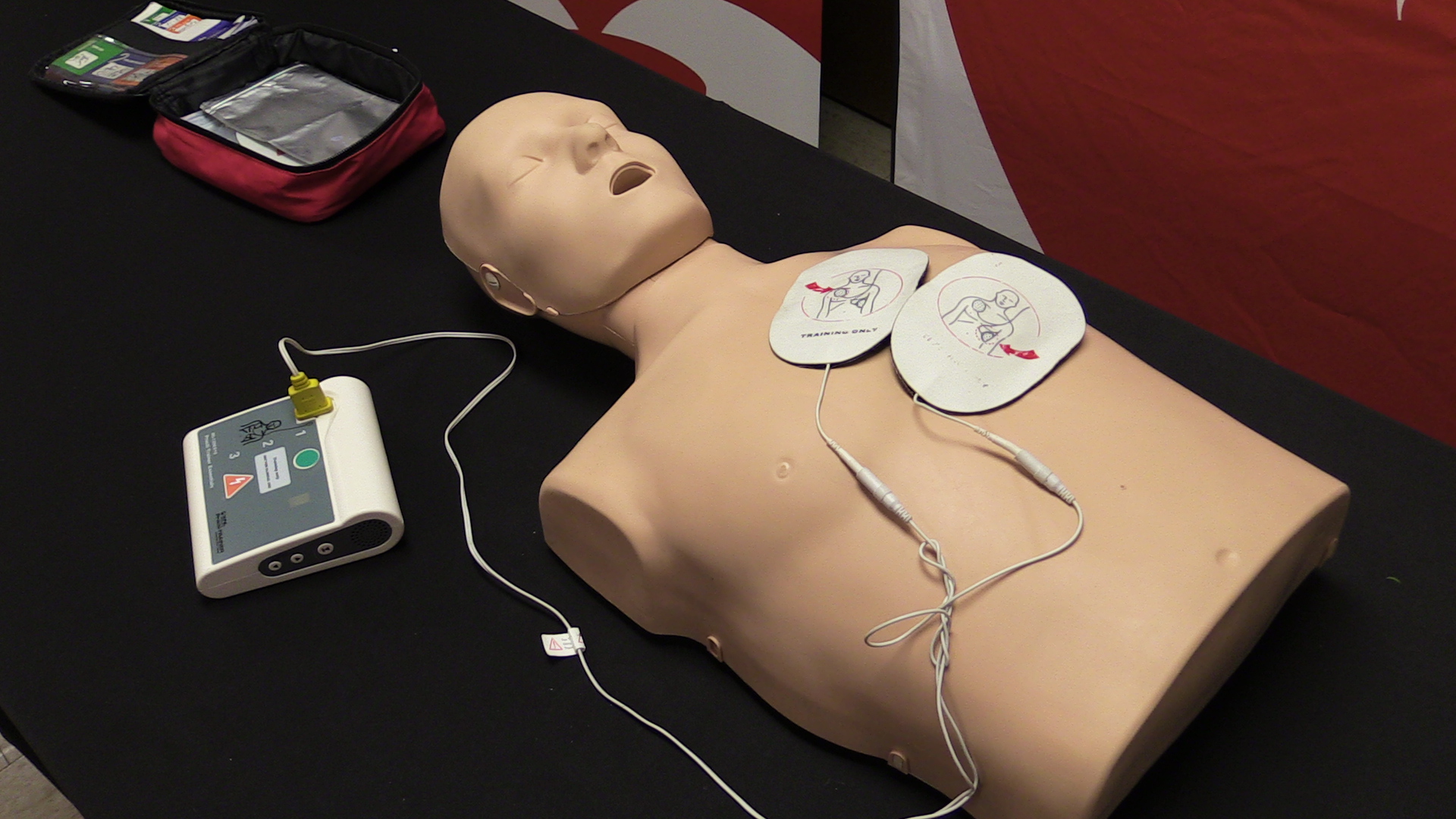
Hamlin reportedly experienced a cardiac arrest – when the heart stops abruptly with little or no warning. Early recognition of cardiac arrest improves the person’s chance of survival and is key to starting the correct care of CPR and the appropriate use of defibrillation to restart the heart. The on-site medical team evaluated the situation and appeared to quickly remove his safety pads, begin CPR and apply the automated external defibrillator (AED).
CPR can help keep the heart pumping and blood flowing to vital organs until an electrical shock from a defibrillator is available to restore the heart to a normal heart rhythm. Then the patient can be safely moved for further medical treatment, supportive care, testing to determine what the cause of the arrest may have been and recovery, including both physical and mental health resources for the person and their family.
Possible causes
Cardiac arrest can have several causes. Since Hamlin collapsed immediately following a tackle on the play, one potential cause could be commotio cordis. Commotio cordis is a rare phenomenon from a sudden blunt impact to the chest causing sudden death in the absence of apparent cardiac damage. The blow to the chest at precisely the wrong time in the cardiac cycle causes an electrical abnormality in the heart resulting in an irregular heart rhythm that cannot pump blood to the body. Immediate CPR and a shock to reset the rhythm can help the heartbeat return to normal function.
Another cause of cardiac arrest that additional tests are likely to attempt to detect or rule out is hypertrophic cardiomyopathy (HCM) or a thickened heart muscle – a more common cause of sudden cardiac death in young people and athletes specifically. The thickened heart can be due to a genetic condition or can be caused by athletic conditioning that thickens the muscles of the heart and can make it more susceptible to an irregular heart rhythm like ventricular fibrillation/tachycardia.
“This was traumatic for everyone, especially Hamlin’s family and teammates but also for so many others involved and witnessing the event. More than 70% of cardiac arrests that do not happen in the hospital, occur in a home where access to medical professionals and an AED is not as readily available,” said Mariell Jessup, M.D., FAHA, chief science and medical officer of the American Heart Association. “Recognizing a cardiac arrest, calling 911 immediately, performing CPR and using an AED as soon as it is available are critical for survival.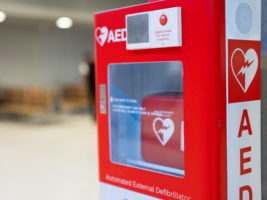
Statistically speaking, it is likely that the person will need to be helped by a family member or a friend to survive.”
Having community members trained in CPR and AEDs in public spaces can increase the chances of survival. The rate of bystander CPR in North America is estimated at only 39-44%, and only about 1 in 10 people survive an out-of-hospital cardiac arrest. Improving the rate of bystander CPR is critical to increasing survival from out-of-hospital cardiac arrest (OHCA).
The skill to perform CPR and use a defibrillator are the foundational components of preparing laypeople to respond to cardiac arrest. People also need to feel emotionally prepared to respond and be able to cope with the aftermath of performing CPR.
Resources for learning CPR
Each year in the United States, an estimated 350,000 people experience sudden cardiac arrest in the community. Anyone who witnesses a cardiac arrest in the community (i.e., not in a hospital) can perform CPR. Roughly 70% of cardiac arrests that do not happen in the hospital, occur in homes and private residences, therefore, a friend or family member is mostly likely to be the person who needs to take action. CPR, especially if performed immediately, can double, or triple a cardiac arrest victim’s chance of survival.
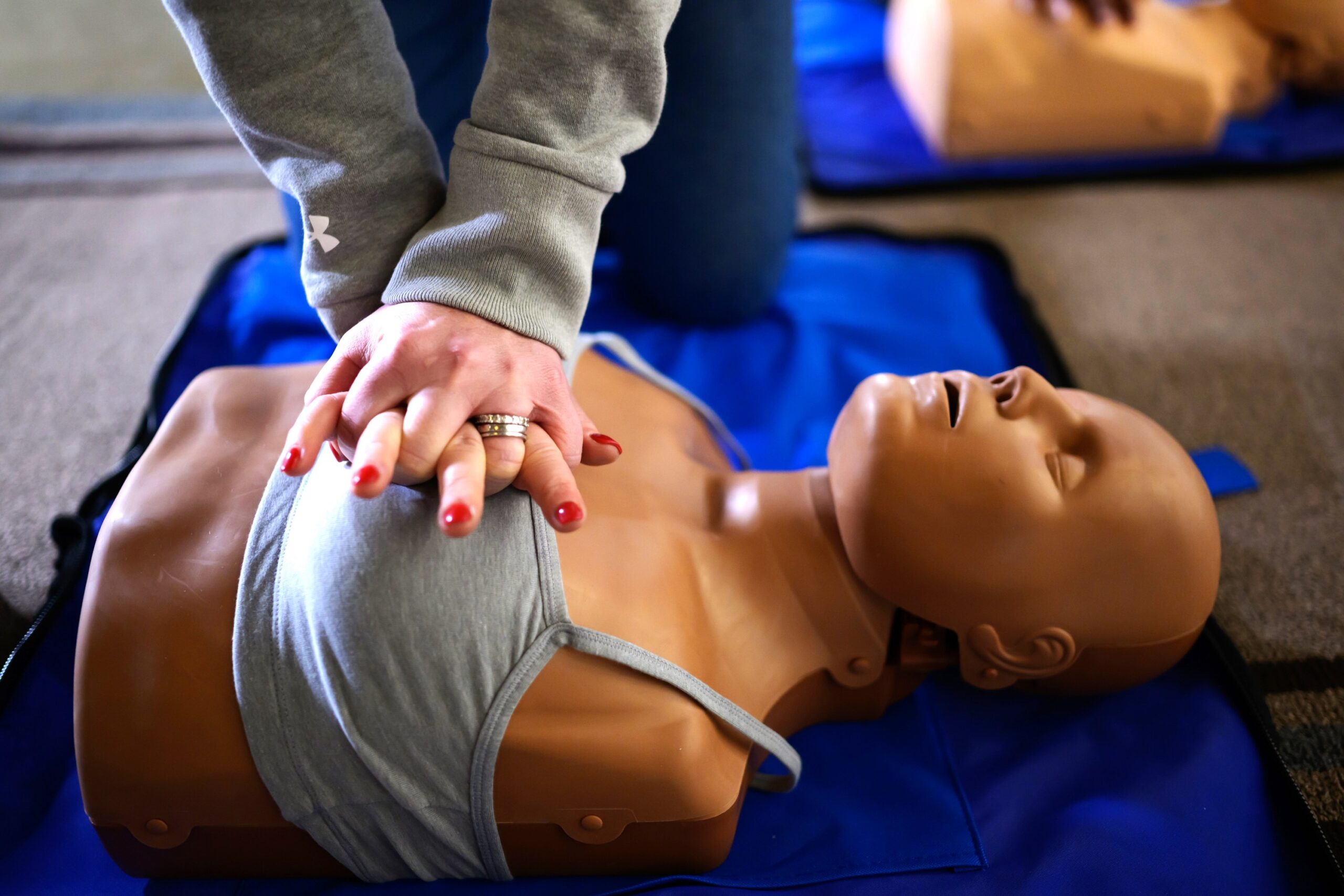
For adults and adolescent children, Hands-Only CPR is an easy-to-learn skill that requires only two steps: call emergency services and push hard and fast in the center of the chest at a rate of 100-120 beats per minute.
For more information, visit heart.org
