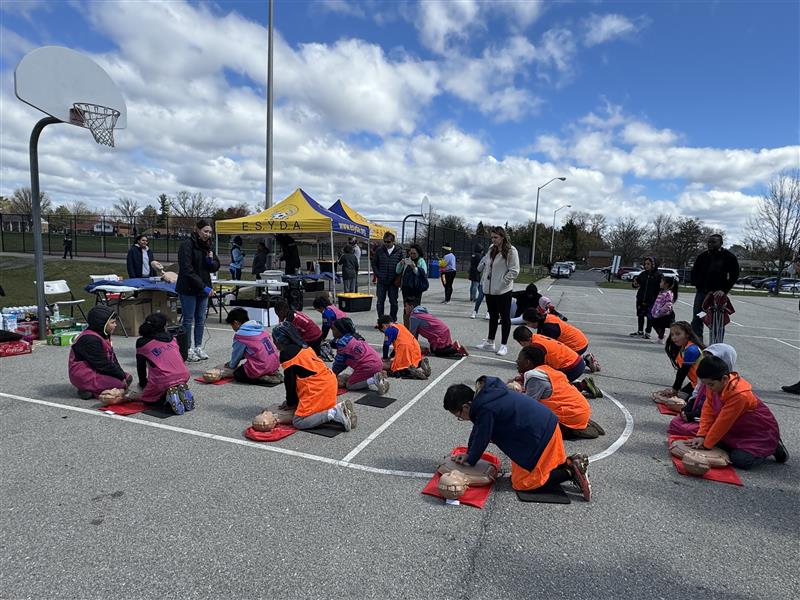
When sudden cardiac arrest strikes, every second counts. Yet, only about 40% of people who experience an out-of-hospital cardiac arrest receive the immediate help they need before professional responders arrive. The survival rate drops by 10% every minute without CPR or use of an Automated External Defibrillator (AED). That’s why the American Heart Association is working to turn bystanders into lifesavers. We envision a world in which anyone, anywhere is prepared in the event of a cardiac emergency and empowered to become a vital link in the chain of survival. That’s where the Cardiac Emergency Response Plan (CERP) comes in.
A CERP is a written, site-specific document that outlines the steps an organization should take to respond swiftly and effectively to a cardiac emergency. Cardiac emergencies can happen anywhere. Whether in a school, workplace, sports facility, or community center, a well-developed plan can mean the difference between life and death.
The core components of a CERP include the formation of a Cardiac Emergency Response Team within the organization. This team is trained in CPR and AED administration and is responsible for activating the emergency response plan that includes calling 911 and directing emergency services to the scene. AED placement and ensuring the device is accessible, functional, strategically located and maintained are also part of the plan. Staff and volunteers should receive regular CPR/AED training and participate in emergency drills. Lastly, the plan should be reviewed and updated annually to ensure its ongoing effectiveness.
To get started and implement a CERP in your community, the Association offers a comprehensive CERP Implementation resource and editable templates. These templates are available in both English and Spanish, to help organizations build and maintain their plans. These tools are designed to adapt to different environments and needs.
Across the Greater Washington Region, the Association’s Community Impact team is aiming for every school and athletic facility to have a CERP in place and working directly with local emergency service providers to integrate the plans into the community’s fire and emergency medical services (EMS) responder protocols. By implementing a CERP, your organization becomes part of the growing movement of the Nation of Lifesavers to improve survival rates from cardiac arrest. It’s not just a plan; it’s a commitment to saving lives.
In addition to organizational efforts, local emergency services are stepping up to champion cardiac emergency preparedness. Washington, DC; Montgomery County and Prince George’s County Fire and EMS departments are actively implementing community-based CPR training programs across the region. These initiatives aim to empower residents with the skills and confidence to act quickly in a cardiac emergency, before professional help arrives. By offering hands-on training sessions, public awareness campaigns, and partnerships with schools and community centers, local Fire and EMS departments are helping to build a stronger, more responsive chain of survival. Their leadership underscores the importance of collaboration between emergency responders and the public in creating a Nation of Lifesavers.
Explore how local Fire and EMS departments are leading the charge to build a Nation of Lifesavers — this video series showcases the powerful steps they’re taking to strengthen cardiac emergency preparedness across our communities.
To learn how you can implement a CERP in your community, contact Greater Washington Region Community Impact team at gwraha@heart.org.