After surviving a rare posterior stroke at 35, Nick Farris is helping to expand what people know about stroke signs and why immediate action still matters.
On the morning of December 19, 2023, Nick Farris expected his day to begin like any other. Instead, within moments of getting out of bed, something felt wrong.
“I felt like I lost my internal gyroscope,” Farris said.
He wasn’t confused or weak. He could think and speak clearly. But the room felt violently unstable. He couldn’t sit upright without vomiting. The only relief came from lying face down on the floor of his shower, eyes closed, trying to stay still.
“It felt like the worst seasickness you can imagine,” he said. “Except nothing was moving.”
It didn’t look like the stroke symptoms many people recognize. Still, when his wife asked if she should call 911, Farris knew he needed urgent medical care.
He was awake and alert when emergency responders arrived, even making jokes as a way to cope.
Because his symptoms didn’t match the most familiar warning signs, there was initial uncertainty about what was happening.
Farris was experiencing a posterior cerebellar stroke caused by interrupted blood flow in the back of the brain, which is the area responsible for balance, coordination and how the brain processes information from the eyes and ears.
Instead of facial drooping or arm weakness, he lost his sense of orientation. His eyes moved uncontrollably — a symptom called nystagmus — making it nearly impossible to tell up from down or left from right.
Posterior strokes are less common and can be harder to recognize, especially in younger adults. Farris was just 35 years old.
At the hospital, a stroke specialist recognized what was happening and moved quickly to provide care. Farris received clot‑busting medication and was admitted for close neurological monitoring.
Over the next day, he moved between hospital units as doctors worked to understand the extent of the stroke and what recovery might look like. His wife made phone calls no family expects to make, including calling Farris’ parents, who traveled across the country with more questions than answers.
“There was a lot of uncertainty,” Farris said. “We didn’t know what the outcome would be.”
With time, careful monitoring and expert care, those unknowns became clearer. Farris survived his stroke and recovered without the long‑term disabilities many people associate with stroke.
A pediatric hematology-oncology physician, Farris says the experience reshaped how he views life, work and what deserves his energy.
“I joke that I stroked the last filter I had,” he said. “Now I’m left with my sense of humor and a different perspective.”
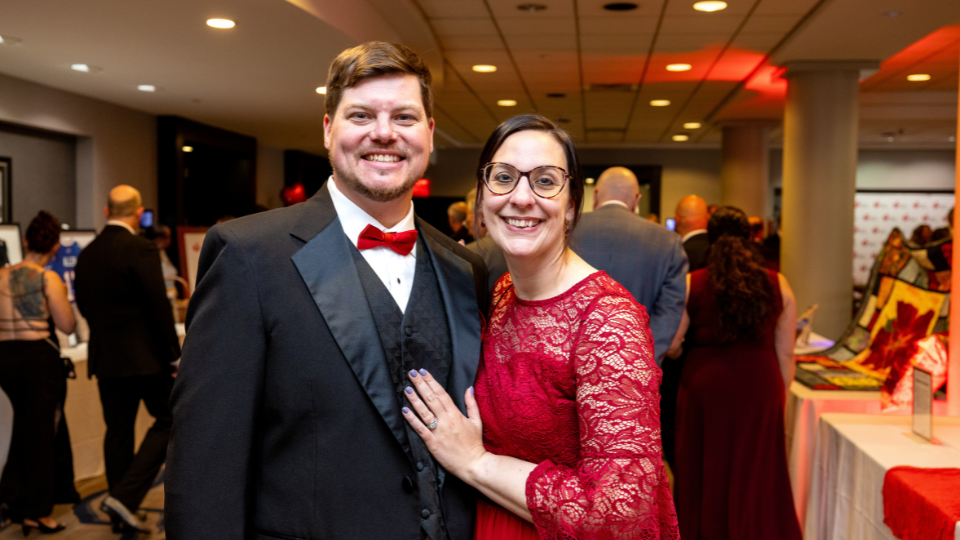
Today, he’s more intentional with his time, more present with his family and more focused on what truly matters.
For Farris, surviving a stroke was about more than physical recovery.
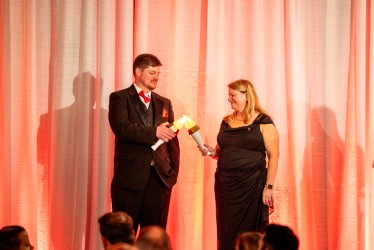
This year, he served as a Caretaker of the Torchat the 2026 Rochester Heart Ball, helping carry forward the American Heart Association’s mission to be a relentless force for longer, healthier lives.
By sharing his story, Farris hopes others will recognize that sudden dizziness, vomiting, trouble with balance or vision changes can also be signs of stroke and that listening to your instincts matters.
“Something didn’t feel right,” he said. “Listening to that feeling mattered.”
Farris’ stroke was uncommon, but the message he carries is not.
By carrying the torch forward, he joins fellow survivors in helping expand what people know about stroke, encouraging earlier recognition and supporting better outcomes for more families.

This story is part of a series highlighting the survivors and honorees behind the 2026 Rochester Heart Ball, each carrying the Torch in their own powerful way.