
Carrying the Torch: Sue Rodeman’s story and the power of B.E. F.A.S.T.

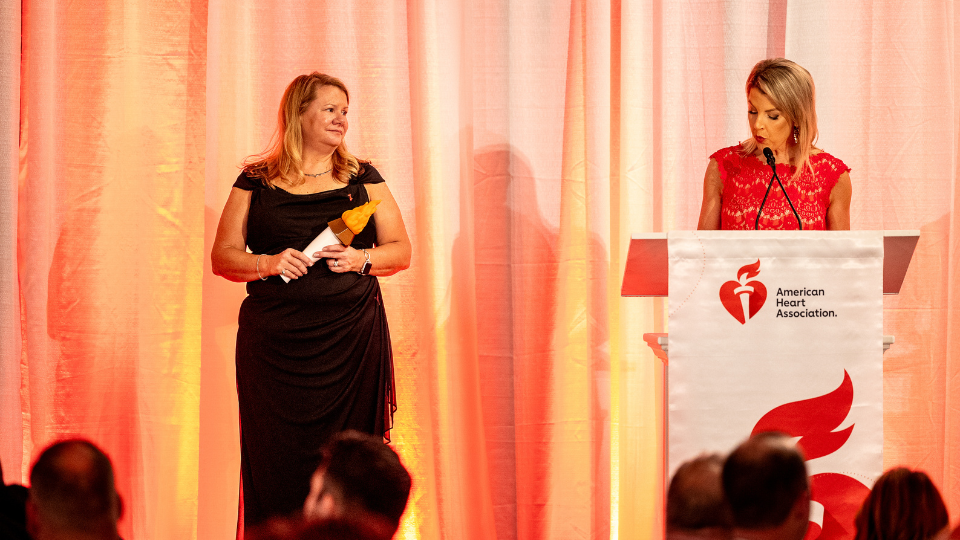
During Stroke Awareness Month, a Caretaker of the Torch from the Rochester Heart Ball shares how acronym ‘B.E. F.A.S.T.’ can save a life. As a Caretaker of the Torch at this year’s Rochester Heart Ball, Sue Rodeman represented survivors, families and advocates who are helping move the American Heart Association’s mission forward. But what many … Read more

Meet Shelbe Hudson: two-time stroke survivor, DJ and advocate

When Shelbe Hudson had her first stroke at the age of 25, it was the last thing she expected to happen to her. Her initial symptoms were headaches and changes in vision, which she largely dismissed as effects of her job and too much screentime.  As the symptoms persisted, she waited. She celebrated the Fourth of July with her … Read more

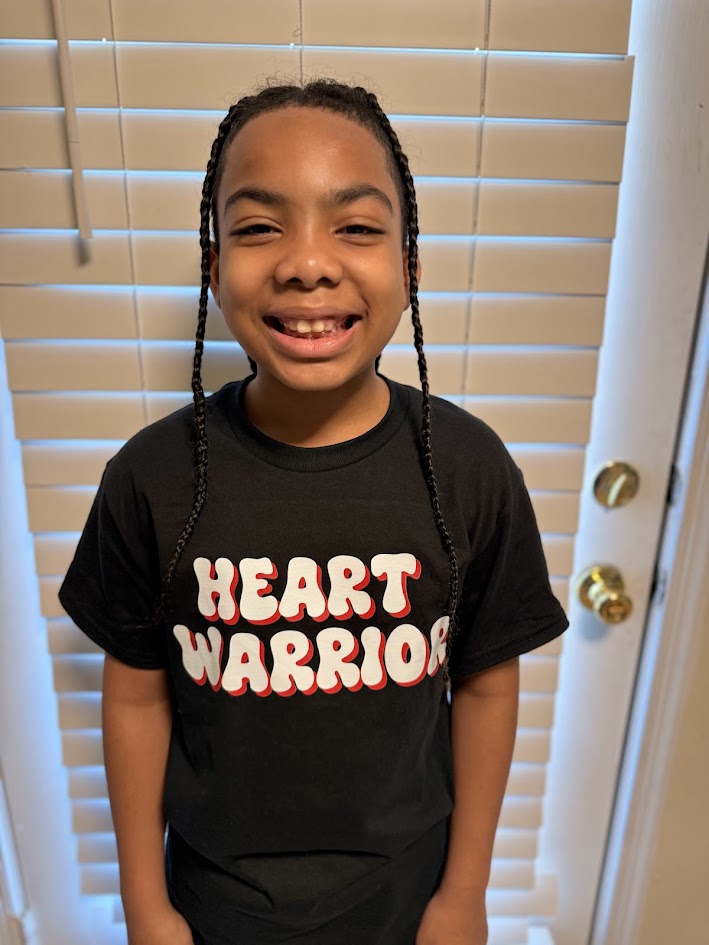
Meet Tony Brown, a heart warrior who beat all odds

When Tita Escobar was five months pregnant, doctors broke the kind of news no expecting parent wants to hear; her baby would be born with a heart condition and might not survive past birth. After a high-risk pregnancy, baby Tony arrived into the world. Tita had mere seconds to hold him before Tony was quickly rushed into the intensive care … Read more

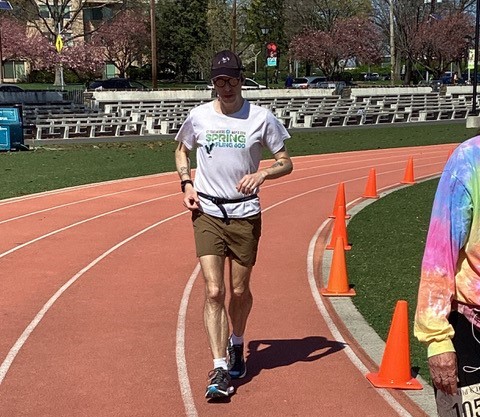
After overcoming a major heart event, ultramarathoner Michael Lo Presti has an important message

Decades ago, when Michael Lo Presti first began his running career, he started seeing the usual positive results that come with this healthy habit… but one troubling symptom persisted. His blood pressure was consistently measuring high. It turned out he was living with an undiagnosed congenital heart defect. A heart ultrasound revealed the cause of the … Read more

Brian Drouin’s lifelong heart journey led him back to the American Heart Association

When Brian Drouin joined the American Heart Association, Greater Washington Region team in March 2026 to lead the Lawyers Have Heart event, it marked a full-circle moment in his heart journey.  Brian was born with d-Transposition of the Great Arteries; as a newborn, he had an arterial switch operation, the first step in a lifelong journey … Read more

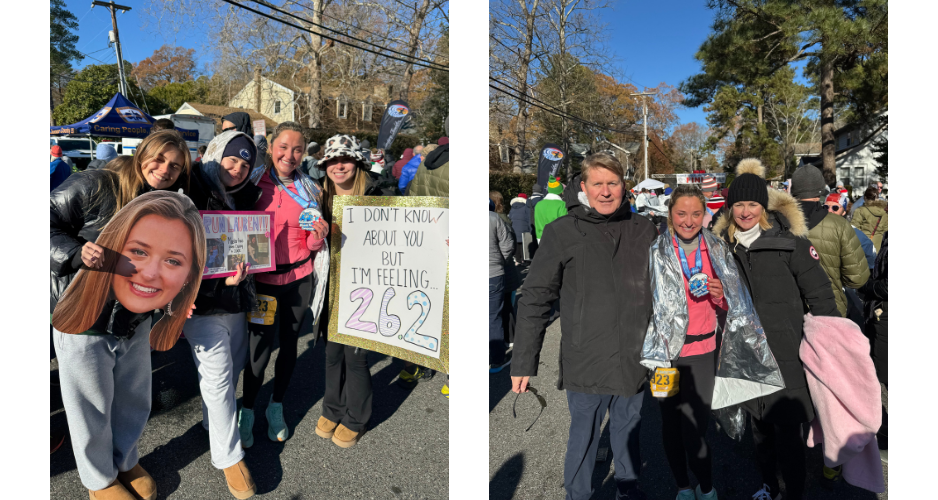
After surviving a stroke at 18, Lauren Treacy set a goal to run a marathon

people at a race

As a college freshman in 2020, Lauren Treacy was getting her first taste of independence. She was home for the holidays after her first semester at Penn State where she met some of her closest friends, took her initial courses toward her degree, went running every day and was gearing up to rush a sorority. December 29, 2020, started as a normal day. Lauren and some friends … Read more

After undergoing a triple bypass surgery, Richard Martin has an important message for other men: pay attention to your heart

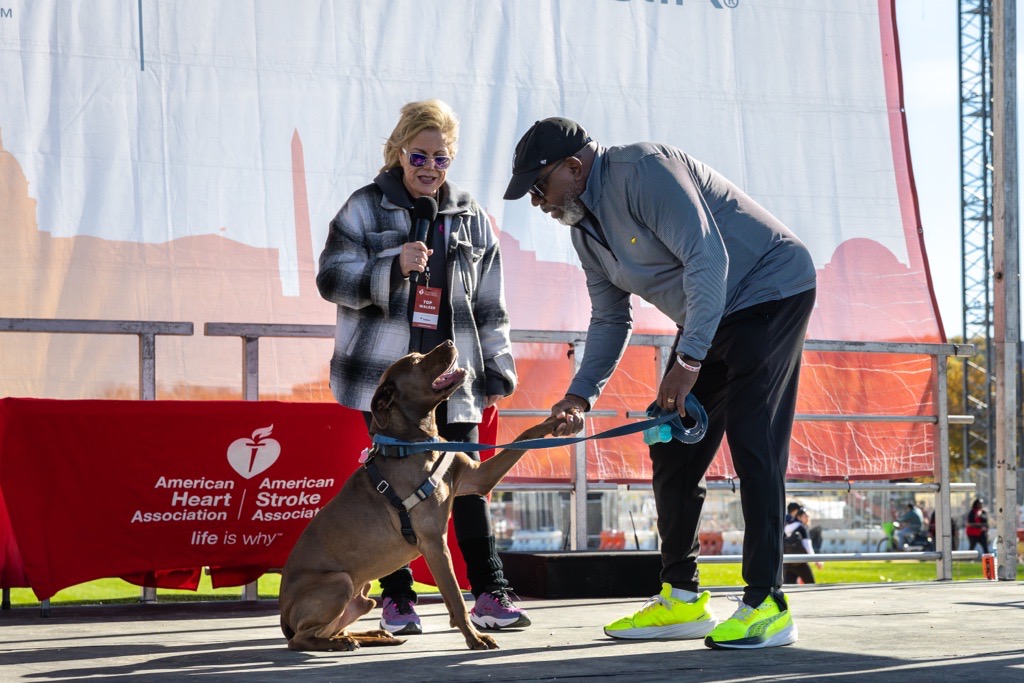
a woman, man and dog on stage

Richard Martin walked in the 2024 Greater Washington Region Heart Walk to get out in the community and join his wife and her colleagues at VHC Health in supporting an important cause. When he returned in 2025, the mission behind the event was much more personal. Richard is a father of four, a grandfather, a golfer and a decades-long sales and marketing professional from Northern Virginia. In recent years, there had been early rumblings that something might … Read more

Resilience of the Heart: Sharron’s Story

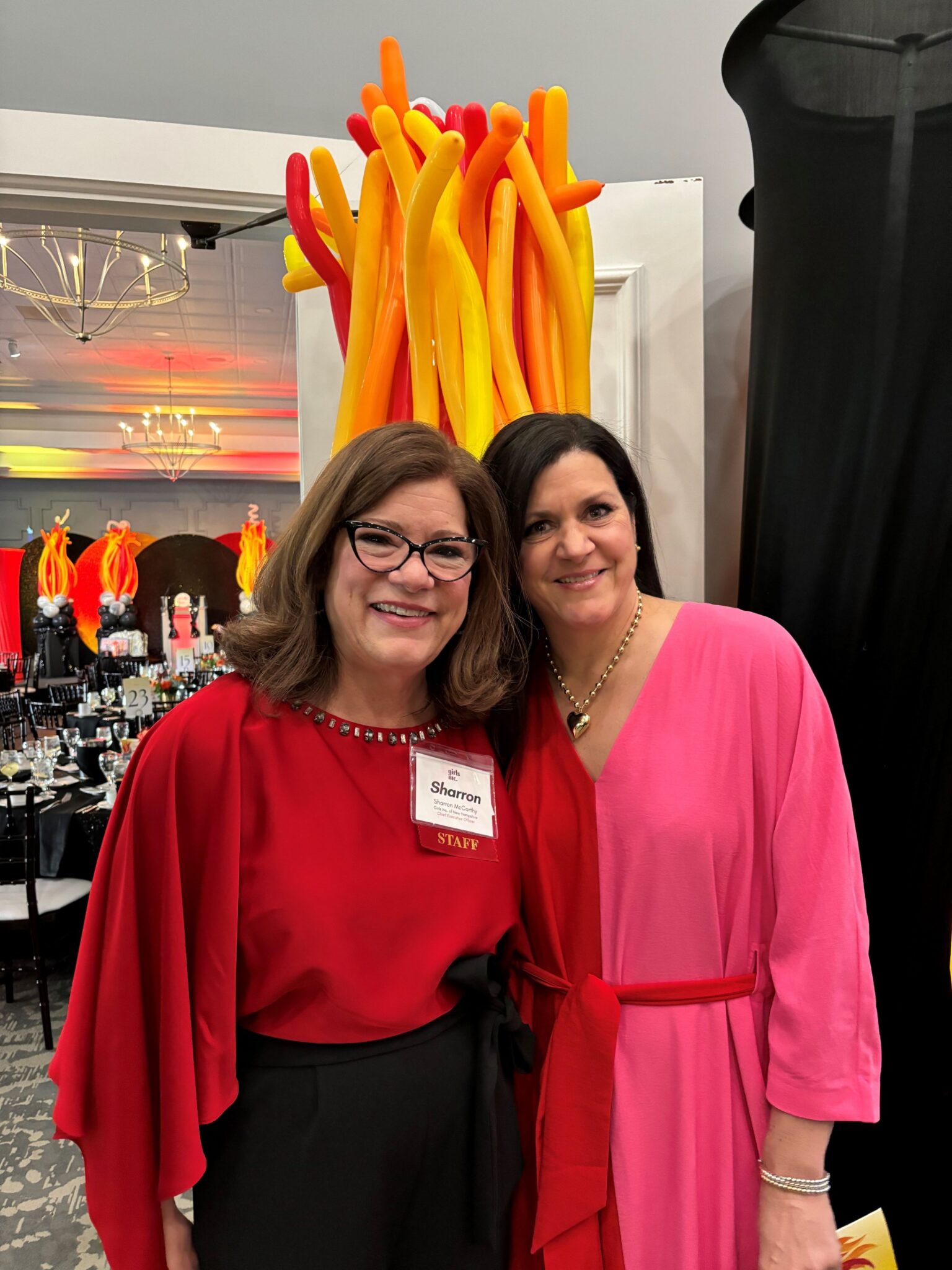
Kristina (right), and her sister, Sharron (left)

Written by Kristina O’Connell, Chief Marketing Officer, Thrive Sharron was a strong, young athlete. She noticed that her heartbeat would sometimes become irregular, but life moved forward, and so did Sharron. Years passed, and after two decades of trying to have a child, Sharron was dealing with another health challenge: a climbing blood pressure, in … Read more

Four generations of women’s stories converge around heart health

This year, when Stacy Yentz of Peraton joined her team for the Heart Walk, the mission behind the event was more personal to her than she could have ever imagined. Last November, Stacy’s mother, Gerri, was diagnosed with Atrial Fibrillation (AFib). What initially seemed like a manageable diagnosis escalated quickly. Just two weeks later, Gerri … Read more

Meet Jeff “Coldstream” Roth: runner, survivor, local executive – and recovery myth buster 

At a May 2019 ceremony, Jeff had a chance to thank the first responders who saved his life

Seven years ago, local executive Jeff Roth survived a near-death experience during a workday run. In the days after, he and his family pieced together what happened. In the years since, he’s been rewriting the story of what recovery really looks like.  Jeff, now director of games at Booz Allen Hamilton, was on a routine … Read more

From joy to a heart scare: a second pregnancy brings a second-degree heart block

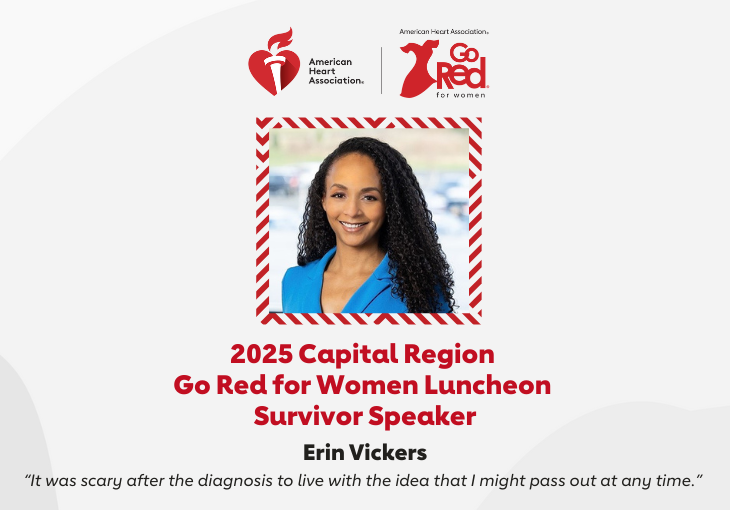
Erin Vickers, 2025 Capital Region Go Red for Women Luncheon survivor speaker. “It was scary after the diagnosis to live with the idea that I might pass out at any time.”

Survivor Erin Vickers will share her powerful heart story at the American Heart Association’s Go Red for Women Luncheon in October Erin Vickers of Latham is only now learning what “normal” is for her and her family. She will share her story of living with heart disease at the Go Red for Women Luncheon, a … Read more

Guest Blog: Be prepared to save a life

Sophie Loughran came home to visit her family in Stannard, VT. Although she did not plan to save her father’s life, she was prepared with Hands-Only CPR and a refurbished automated external defibrillator (AED). Written by Sophie Loughran After recently moving to Denver, Colorado, and feeling a bit homesick, I traveled home to my family’s … Read more

Guest Blog – Taking the “luck” out of surviving cardiac arrest

Payton Jones of Bristol, VT suffered cardiac arrest at age 11 during her swim meet. She is alive today to tell the story thanks to immediate CPR and automated external defibrillator (AED) use. I’m lucky to be alive. An undiagnosed heart condition caused me to suffer a cardiac arrest during a swim meet in Essex, … Read more

A mother and son with a bond like no other

Ashley and Gabriel Boyea

Ashley Boyea is no stranger to the trials and tribulations that come with cardiac issues. When Ashley was in her 20s, she started experiencing shortness of breath, thinking her asthma was flaring up. However, she got checked out, and her doctor diagnosed her with sick sinus syndrome, which is a condition that disrupts the function … Read more

Damar Hamlin’s Inspiring Recovery: CPR Saves Lives 

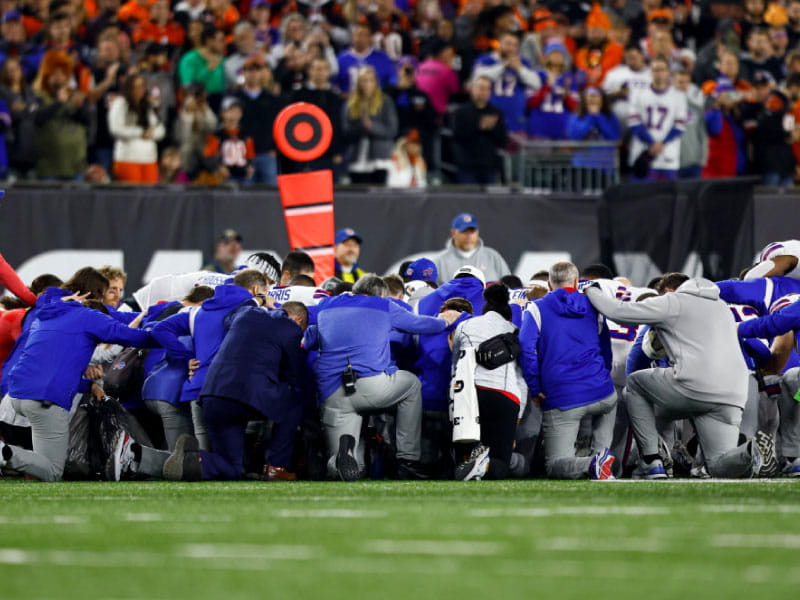
While playing in the Buffalo Bills – Cincinnati Bengals game on Monday Night Football on January 2, Bills player Damar Hamlin suffered cardiac arrest after a hit and was administered CPR on the field before being transferred to an area hospital.

Hamlin reportedly experienced a cardiac arrest – when the heart stops abruptly with little or no warning. Early recognition of cardiac arrest improves the person’s chance of survival and is key to starting the correct care of CPR and the appropriate use of defibrillation to restart the heart. The on-site medical team evaluated the situation and appeared to quickly remove his safety pads, begin CPR and apply the automated external defibrillator (AED).  

CPR can help keep the heart pumping and blood flowing to vital organs until an electrical shock from a defibrillator is available to restore the heart to a normal heart rhythm. Then the patient can be safely moved for further medical treatment, supportive care, testing to determine what the cause of the arrest may have been and recovery, including both physical and mental health resources for the person and their family.

Possible causes

Cardiac arrest can have several causes. Since Hamlin collapsed immediately following a tackle on the play, one potential cause could be commotio cordis. Commotio cordis is a rare phenomenon from a sudden blunt impact to the chest causing sudden death in the absence of apparent cardiac damage. The blow to the chest at precisely the wrong time in the cardiac cycle causes an electrical abnormality in the heart resulting in  an irregular heart rhythm that cannot pump blood to the body.  Immediate CPR and a shock to reset the rhythm can help the heartbeat return to normal function.

Another cause of cardiac arrest that additional tests are likely to attempt to detect or rule out is hypertrophic cardiomyopathy (HCM) or a thickened heart muscle – a more common cause of sudden cardiac death in young people and athletes specifically. The thickened heart can be due to a genetic condition or can be caused by athletic conditioning that thickens the muscles of the heart and can make it more susceptible to an irregular heart rhythm like ventricular fibrillation/tachycardia.

“This was traumatic for everyone, especially Hamlin’s family and teammates but also for so many others involved and witnessing the event. More than 70% of cardiac arrests that do not happen in the hospital, occur in a home where access to medical professionals and an AED is not as readily available,” said Mariell Jessup, M.D., FAHA, chief science and medical officer of the American Heart Association. “Recognizing a cardiac arrest, calling 911 immediately, performing CPR and using an AED as soon as it is available are critical for survival.
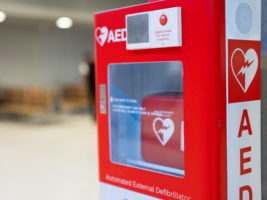
Statistically speaking, it is likely that the person will need to be helped by a family member or a friend to survive.”

Having community members trained in CPR and AEDs in public spaces can increase the chances of survival. The rate of bystander CPR in North America is estimated at only 39-44%, and only about 1 in 10 people survive an out-of-hospital cardiac arrest. Improving the rate of bystander CPR is critical to increasing survival from out-of-hospital cardiac arrest (OHCA).

The skill to perform CPR and use a defibrillator are the foundational components of preparing laypeople to respond to cardiac arrest. People also need to feel emotionally prepared to respond and be able to cope with the aftermath of performing CPR.

Resources for learning CPR

Each year in the United States, an estimated 350,000 people experience sudden cardiac arrest in the community. Anyone who witnesses a cardiac arrest in the community (i.e., not in a hospital) can perform CPR. Roughly 70% of cardiac arrests that do not happen in the hospital, occur in homes and private residences, therefore, a friend or family member is mostly likely to be the person who needs to take action. CPR, especially if performed immediately, can double, or triple a cardiac arrest victim’s chance of survival.

For adults and adolescent children, Hands-Only CPR is an easy-to-learn skill that requires only two steps: call emergency services and push hard and fast in the center of the chest at a rate of 100-120 beats per minute.

For more information, visit heart.org


Despite more than 20 years on her heart journey, she remains hopeful

Jessica Blomn’s story of survival has spanned more than two decades. “My journey is a long one,” she said. “It all began when I was in my senior year at Montclair State University, where I was one of the team captains for the swim team and president of my sorority.” Jessica’s doctor suggested she see … Read more

Gia had open heart surgery at three days old. Now, she’s celebrating her second birthday.

Michele and John McGovern III always dreamed of starting their own family. So, when they found out they were pregnant and expecting their first child in March of 2020, words could not describe how overjoyed, blessed, and hopeful the couple felt. After what seemed to be a smooth and typical pregnancy, the McGoverns received shocking … Read more

Krysta’s Heart Stopped on the Operating Table. Now She’s Reclaiming Her Rhythm During American Heart Month!

On the morning of September 24, 2021, Krysta headed into the doctor for a pre-scheduled hip surgery. As an active 30-year-old with no pre-existing conditions or serious health concerns, Krysta anticipated a simple operation. The last thing she remembers is going under anesthesia around 11 a.m. Two days later, she woke up confined to a … Read more

CPR Saves Lives – Charlie’s Story

April 3, 2019 began like any other day for Charlie Nordhoff. Little did he know that his life would change forever and he would be saved through CPR, thanks to the quick, life-saving actions of his colleagues. Charlie did not recognize that he was having a heart attack, nor did he recognize any symptoms of … Read more

Greater Maryland Heart Walk – Tuesday Team Shout Out

Hi! I am Mike Mathis. In August 2017, at the age of 50, I had a “widow maker” heart attack and survived. Everything went right that day. From the decision to have my wife drive me to the hospital, to the ER Doctors and Staff not giving up on me, even after 40 minutes. I … Read more

F.A.S.T. Friday – Survivor Spotlight – NeAnna

I am a survivor. I am a 40-year-old mom of three boys, a hairless Chinese crested and black cat and at the age of 33, I suffered my first silent stroke. I was employed with an organization that presented extremely intense situations daily. While I loved my career greatly and especially adored my colleagues, I … Read more

F.A.S.T. Friday – Survivor Spotlight

I’m A Survivor It was April 11, 2009, a normal Saturday morning.  I lived alone and had just gotten up to let my two dogs out.  My brother worked close by on the weekends and he had just called me to ask a favor.  I told him I would go brush my teeth then do … Read more

F.A.S.T. Friday – Survivor Spotlight

My name is Olivia Richardson and I am a two-time stroke survivor, former LVAD patient, and heart-transplant recipient. I was first diagnosed with cardiomyopathy and had my first stroke at the age of 25. This was a shock to me because I had always been an athlete and been healthy all my life. After my … Read more

My Pawesome Stroke Hero

How a furry friend helped me heal By Stacy Quinn, Guest Blogger Having a strong support system is important when you’re coping with the aftermath of a health crisis, especially the emotional ramifications. After my stroke, my appearance suggested I was just fine. But below the surface, I had stabbing eye and neck pain, blurry … Read more